Although the circular firing squads have already formed and are carrying out their appointed tasks, I, for one, feel it’s too early to get a firm grip on why Donald Trump was able to win not only the electoral college, with its historic roots sunk deep in the soil of slavery, but the popular vote as well. For those less inclined to wait, the culpable parties include Inflation, an economy measured by the cost of eggs rather than bridges built or the Dow Jones index, working class anger, racism, misogyny, the “deplorables,” the Gaza war, elitism, an electoral system marinating in cash – an estimated $16 billion was spent on the current presidential election alone, more than the GDP of 51 countries! – and the weak standing of a current president which was passed down to his successor, not to mention the Democratic Party or the Republican Party, take your pick.
As I always have an eye out for the education sector, one factor stood out for me, yet again. Exit polling by both CBS and NBC revealed that educational achievement remains the most likely predictor of voting preference, having surpassed income levels some cycles ago.
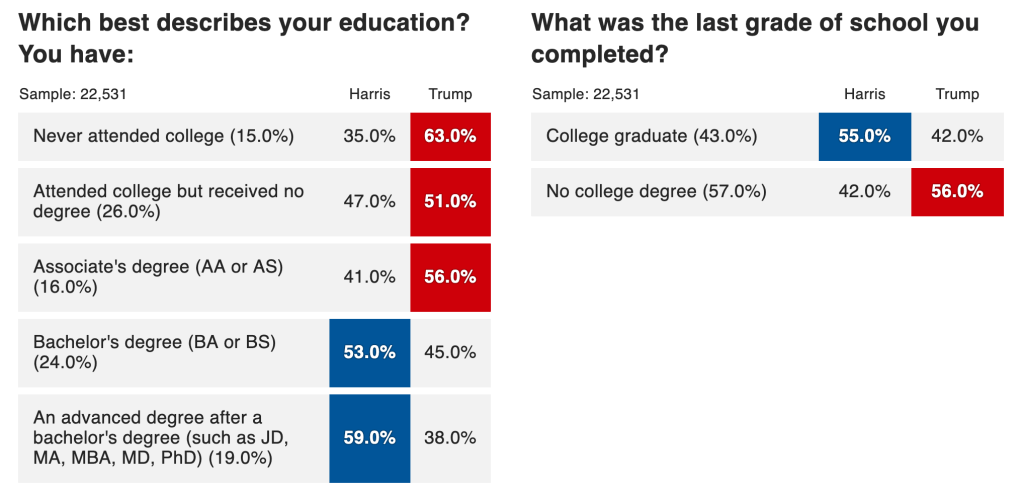
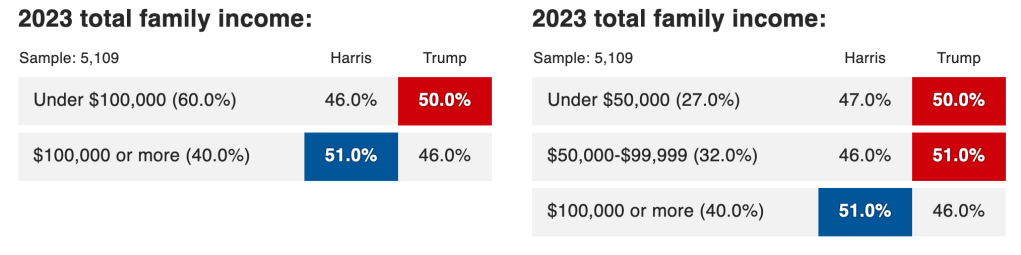
Those of us in higher education have a lot to think and talk about in the months and years ahead.
For the moment, though, something else is on my mind. My wife and I went to see “Small Things Like These” over the weekend at a nearby cinema. Based on the spare novel by Claire Keegan, the film is set in Ireland in the 1980s. “Small Things” follows Bill Furlong (played by a magnificent Cillian Murphy), a man of few words and troubled memories, who delivers coal to the inhabitants of his small Irish town. Surrounded by his wife and their five girls, Furlong doesn’t drink, cares for his family, and works diligently at his back-breaking, monotonous job, He gets by, if barely, and generally without complaint. Still, he often lies awake in the middle of the night, staring out to the street and wondering “what was it all for?”
Continue reading After Class