Although the circular firing squads have already formed and are carrying out their appointed tasks, I, for one, feel it’s too early to get a firm grip on why Donald Trump was able to win not only the electoral college, with its historic roots sunk deep in the soil of slavery, but the popular vote as well. For those less inclined to wait, the culpable parties include Inflation, an economy measured by the cost of eggs rather than bridges built or the Dow Jones index, working class anger, racism, misogyny, the “deplorables,” the Gaza war, elitism, an electoral system marinating in cash – an estimated $16 billion was spent on the current presidential election alone, more than the GDP of 51 countries! – and the weak standing of a current president which was passed down to his successor, not to mention the Democratic Party or the Republican Party, take your pick.
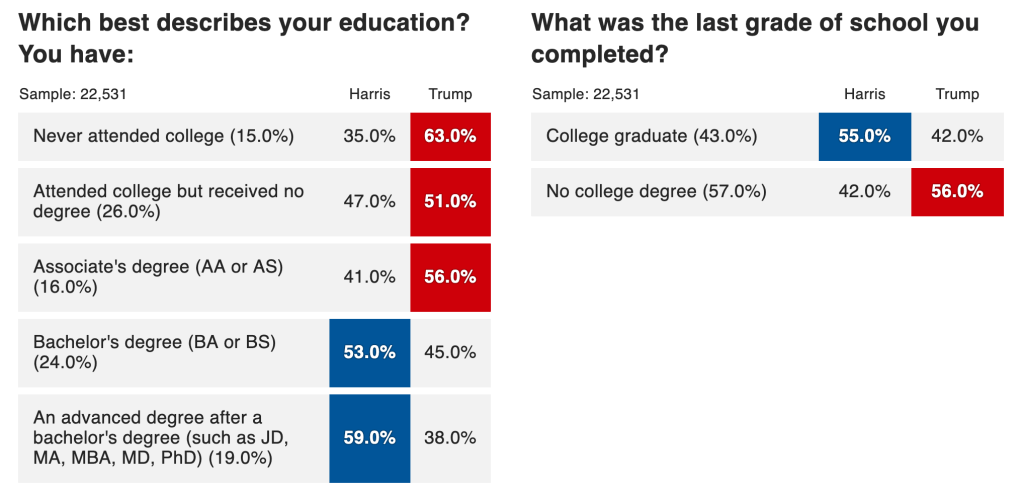
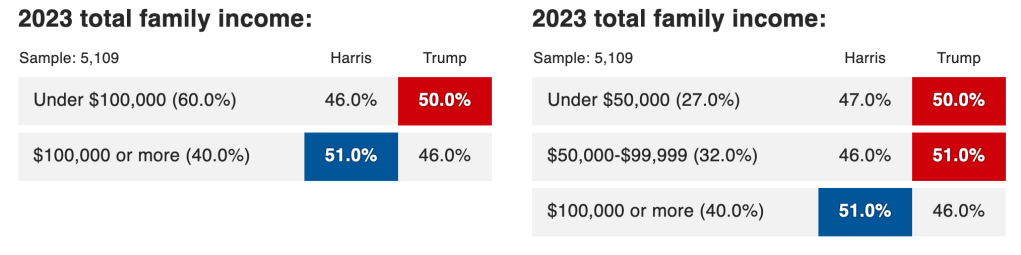
As I always have an eye out for the education sector, one factor stood out for me, yet again. Exit polling by both CBS and NBC revealed that educational achievement remains the most likely predictor of voting preference, having surpassed income levels some cycles ago.
Those of us in higher education have a lot to think and talk about in the months and years ahead.
For the moment, though, something else is on my mind. My wife and I went to see “Small Things Like These” over the weekend at a nearby cinema. Based on the spare novel by Claire Keegan, the film is set in Ireland in the 1980s. “Small Things” follows Bill Furlong (played by a magnificent Cillian Murphy), a man of few words and troubled memories, who delivers coal to the inhabitants of his small Irish town. Surrounded by his wife and their five girls, Furlong doesn’t drink, cares for his family, and works diligently at his back-breaking, monotonous job, He gets by, if barely, and generally without complaint. Still, he often lies awake in the middle of the night, staring out to the street and wondering “what was it all for?”
“The work and the constant worry. Getting up in the dark and going to the [coal] yard, making the deliveries, one after another, the whole day long, then coming home in the dark and trying to wash the black off himself and sitting into a dinner at the table and falling asleep before waking in the dark to meet a version of the same thing, yet again. Might things never change or develop into something else, or new?”
If these existential questions deprive him of sleep, they neither prevent him from taking a “deep private joy that these children were his own” when he sees his girls thank a shopkeeper who hands them their change. Nor do they blind him to the injustices he witnesses daily: the barefoot child in the cold, pre-dawn hours drinking milk from a saucer left out for the cats; the young woman, likely pregnant and unmarried (as was his own mother), pushed against her will inside the convent to which he delivers coal. (Keegan’s novel takes steady aim at the Magdalene Laundries, institutions run at a profit by Ireland’s Catholic nuns who exploited the forced labor of “fallen women” and orphans shunted into their “care.”)
Still, Furlong does what he can, what he knows he should. Getting ready for bed, he tells his wife, Eileen, that he saw “Mick Sinnott’s little chap…out on the road again today, foraging for sticks.”
“I suppose you stopped?” Eileen asks, already knowing the answer.
“Wasn’t it spilling rain,” Furlong replied. “I pulled over and offered him a lift and gave him what bit of change was loose in my pocket.”
Eileen responds that the lad’s father was seen drunk (“stotious” is the word Keegan uses in the novel) in a phone box the other day. But for Furlong, “Tis not the child’s doing, surely,” expressing concern as well for “whatever ails” the man that led him to drink.
For Furlong, “small things like these” replay in his mind night after night.
Keegan’s novel, itself a small thing, is a treasure, as is the movie. And, seeing it after anguishing through Tuesday night as the election disappointments accumulated, I found that “Small Things” spoke to me with a surprising urgency. Bill Furlong’s life was lived in the shadow of long-established institutional crimes and the all-too-many individual failures that marked Ireland at the time. Confronting both rendered him sleepless, but didn’t paralyze him or turn him into a self-regarding cynic. Despite the gentle displeasure of his wife and the icily veiled threats of the convent’s Mother Superior, Furlong continues to act in his small ways, always guided by conviction and a firmly positioned moral compass. Spoiler alert: When Furlong discovers a young, pregnant girl yet again forced by the nuns to sleep in the convent’s freezing coal shed, he takes her to his home and family, despite having been warned of the serious consequences to follow should he stick his nose into the Church’s business. Neither Keegan’s novel nor the film discloses what happens next, but it is quite clear that Furlong’s action will bring down a mountain of hurt on him and his family. After all, the institutional and spiritual power of the Church in Ireland was immense.
And yet we know that without the “small things” that Furlong does to help others – big in consequences for his family, small in the overall scheme of things – there would be no progress, and no hope. To remind us of this, the end titles of the film disclose that the last Magdalene Laundry was shut in 1996, after some 10,000 women and girls passed through their doors. Without the individual actions of the fictional Furlong and thousands of actual campaigners, who’s to say that unwed mothers, orphans, and prostitutes wouldn’t still be pressing sheets in Ireland’s convent laundries?
Watching the film, with Trump’s thumping victory in mind, I thought about Furlong and the value of “small things like these.” As academics, intellectuals, pundits, and – yes – elites, we think – and bicker – about the very large things that stand in the way of a more equitable, just future. And I don’t dispute that analyzing the big things is important. But big-picture analysis can often aggravate differences, mask common interests, and serve to immobilize us by highlighting the height of the hill which lies before us. Big-picture analysis can often discourage us from the small things that we can, and must, do now.
What will be demanded of us over the next period is considerable. At the moment, our hearts may feel too heavy, and our minds too muddled, to know how to respond with the required energy and clarity. But for today – as these larger orientations take shape – we turn to the “small things” that can demonstrate our commitment to human dignity, equality, and justice, whether helping those in need of aid or comfort; sending “what bit of change” is loose in our pockets to organizations that can make a difference; volunteering at our local food banks; inviting our immigrant neighbor to dinner; beginning the conversations that need time and courage to develop. It is in doing these small things that we discover that most people will listen compassionately and react generously to those who stand directly in front of them even while politicians feed them large abstractions (immigrants, the trans community, etc.) designed to stoke their anger. It is the small things that will lay the foundation on which the work ahead will be built.


As always, your writing is a source of comfort and inspiration to me. Thank you for continuing to be a light in my world. ~Adina
LikeLike
The election was lost because Harris didn’t inspire the Left and Democratic constituencies (especially Black and young) simply didn’t turn out in the same numbers as they did in 2020. Meanwhile, Trump was very effective getting his base to turn out and got more votes from Latinx and Black voters than previously, due to Harris not providing a vision for the future that addressed their concerns. Endless analysis should be replaced by a more activist strategy for the future, drawing from Bernie Sanders, etc.
LikeLike