In a recent New Yorker article, Susan Glasser wondered “Why aren’t we in the streets?” As Trump — who now refers to himself as a “king” and toys with the idea of serving a third term in the White House — and his co-president Elon Musk rip through the government, mocking legal barriers, scolding allies, and shredding the lives of millions, we remain, Glasser laments, “quiescent.” Perhaps we have simply been “overwhelmed by the unimaginable becoming real,” as M. Gessen suggested.
While the abysmal cruelty of Trump’s attacks on immigrants and the trans community is intended to isolate and terrify those vulnerable communities, his campaign to dictate what can and cannot be taught in our nation’s schools threatens to reinforce the structures of white supremacy and undermine the very purpose of education itself.
Consider the email recently sent by the Provost of the Naval Academy, Samara Firebaugh, to her faculty. In it she instructed faculty to comb through course materials to extirpate such offensive words as “diversity,” “minority,” “belonging,” “bias,” “representation,” and “oppression.” “Do not use materials,” she commanded, “that can be interpreted to assign blame to generalized groups for enduring social conditions, particularly discrimination or inequality… Do not employ readings or other materials that promote the concepts of ‘gender ideology,’ ‘divisive concepts,’ ‘race or sex stereotyping,’ and ‘race or sex scapegoating,’ including critical race theory, intersectionality, privilege, patriarchy or other such theories.”
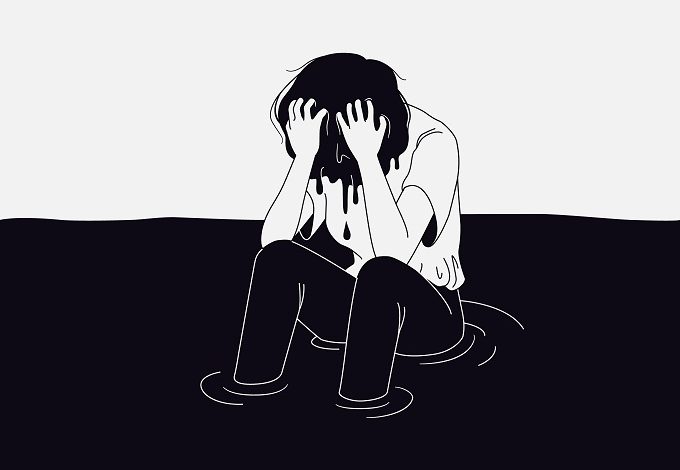
Jon Fansmith, of the American Council on Education, calmly observed that “This idea that anything that speaks to diversity is somehow discriminatory is very, very far out of the norm and very much outside of the law.” Dylan (of Severance, not of “Subterranean Homesick Blues”) would put it more succinctly: “What the abominable fuck?”
Of course, there is a history behind Firebaugh’s email and the Trumpian blitzkrieg against academic freedom. Red-state governors have been paving the road to curricular suppression for years now under the guise of upholding “intellectual diversity” and attacking “race discrimination.” The authoritarian-right gathered under the MAGA banner views the education sector (from pre-K through higher ed) as an exceptionally attractive target ripe for a hostile takeover. It is – we are – vulnerable because of its many actual defects, from the failure to serve low-income communities at all levels, to the high cost of, and limited access to, higher education. It is a desirable target since public, accessible, quality education has long been understood as a cornerstone of a democratic society. If all children – and not just Florida’s school kids – can be taught that enslaved people benefited from slavery, January 6 was a day of love, and cooking fries in beef tallow does wonders for your health…then we can be sure that democracy is on its deathbed.
Understanding this, well-financed and highly organized extremist organizations such as Moms for Liberty have taken control of school boards across the country, demanding that parents, not “woke” teachers administrators, and certainly not “woke” parents, decide what students should learn, what books should be in their libraries, and who should be allowed to teach them. Public colleges and universities followed soon after, caving to the demands of red-state governors and legislators to take steps to combat the “liberal indoctrination” occurring on their campuses. After all, they reasoned, is there any other way to explain why voters with a college education favor Democrats?
Since 2021, seventeen states have adopted 25 laws or policies restricting ideas on college campuses, with state-level educational gag orders banning “divisive concepts” from classroom instruction. Starting in 2023, these attacks expanded to include a host of assaults on university governance and autonomy: bans on diversity, equity, and inclusion offices and on institutional statements on race, gender, and identity; ideological limitations on majors, minors, and core curricula; and restrictions on tenure, shared governance, and accreditation.
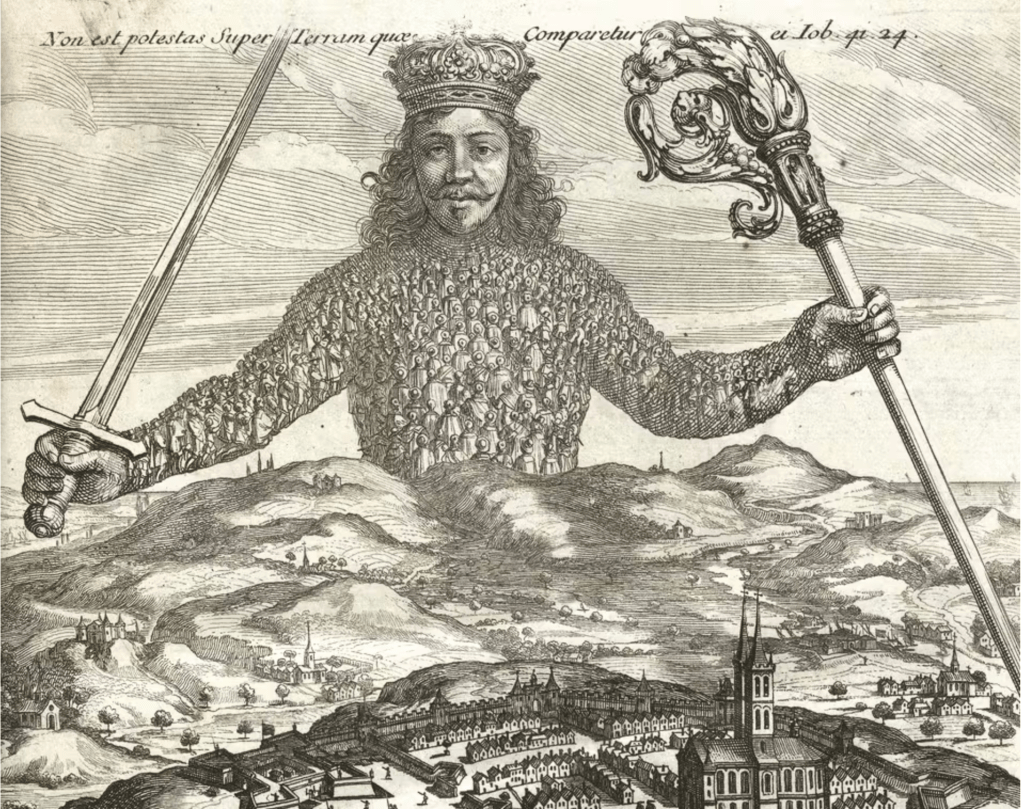
Ohio’s own 76-page educational destruction bill recently passed the Senate (SB1) and is currently in House committee hearings. It is a ghastly brew of contradictory ideas. Ohio’s public institutions of higher education, the bill’s authors insist, “will educate students by means of free, open, and rigorous intellectual inquiry to seek the truth,” while simultaneously banning lessons that might cause personal “discomfort” or “psychological distress.” The measure also establishes mechanisms to encourage vigilante-activists to key word search all faculty syllabi in the hopes of turning up such offending terms as “belonging” or “patriarchy.” In a demonstration of how “anticipatory obedience” is incentivized by tyrants, educators are warned to stay away from subjects held in disfavor by the MAGA base…if they know what’s good for them.
Ohio’s proposed “snitch line” parallels the recently mounted “portal” opened by the Trump administration through which his adherents can report anything that hints of diversity or inclusion cropping up in the nation’s schools. Somewhere in a far hotter clime, I imagine that Orval Fabus and George Wallace are having a good chuckle.
Who wants to be a target?
In an attempt to help those in higher education get a grip on the wreckage left by Trump’s first five weeks in office, the Chronicle on Higher Education organized a virtual forum which attracted a large audience, myself included. Of particular concern was the Department of Education’s February 14 “Dear Colleague” letter asserting that “Educational institutions have toxically indoctrinated students with the false premise that the United States is built upon ‘systemic and structural racism,’” and demanding that all considerations of race be expunged from university activities. Schools were given two weeks to be “in compliance” with its directives or lose federal funding.
During the session, the presenters asked attendees how their campus leaders have responded to the challenges posed by the new White House’s mandates. Almost 1,700 responses poured in over the course of the hour-long session, with many respondents observing that campus leaders have chosen to keep their heads down, noting long-standing educational missions and hoping to stay below the MAGA radar. At my own college, President Carmen Ambar, spoke to a packed auditorium, stressing that “We must determine the best way to use our institutional voice, the institutional tools, and to respond to what… is in opposition to the values…that have long been established at Oberlin.”
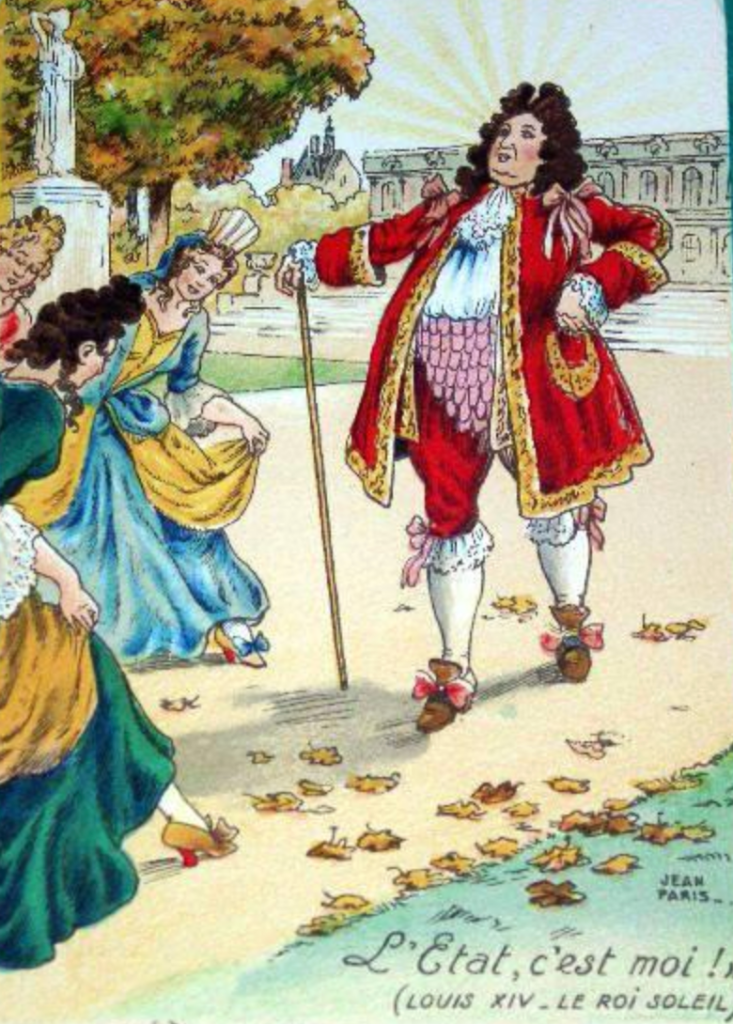
Indeed, this crisis moment has seen very few higher ed leaders willing shout “Fire!” even as the flames rise higher around them, fearful – and honestly, who could blame them – of drawing unwanted attention from a White House eager to make their lives a misery. Based on the unexpected success of the hearings on campus “antisemitism” held by the House Committee on Education and the Workplace last year, hearings that ultimately brought down all three (women) Ivy League presidents who testified while rocketing Elise Stefanik into the MAGA stratosphere, the White House ordered that federal agencies identify up to nine higher education institutions with endowments of over $1 billion for further interrogation over presumed “illegal DEI discrimination.” Why on earth would any administrator want to be one of the nine targets?
And yet, not everyone has seen silence as the best path forward. Michael Roth, the president of Wesleyan University, has insisted that heads of educational institutions “Say Something,” reasoning that civil society leaders can’t be “‘demure’ in the face of authoritarian attempts to align all power with a president’s agenda, civil society be damned.” The president of Carleton College, Alison Byerly, in an interview on NPR’s “All Things Considered,” observed that the “Dear Colleague” letter was an effort to “intimidate colleges.” And Brian Rosenberg, the president emeritus of Macalester College, offered that neither neutrality nor “silence is … an option” when the university’s own existence is “right now under unprecedented threat.”
John K. Wilson is a prolific author on academic freedom. On February 27, he wrote an opinion piece for Inside Higher Ed warning that “Unless the administration’s plans to suppress academic freedom are immediately resisted, rejected and overturned, they will be far worse than government actions during the McCarthy era.” He described the “Dear Colleague” letter as one of the “worst attacks on academic freedom by the government in the history of American higher education…a colossal federal onslaught designed to micromanage all colleges, public and private, and suppress speech on a massive scale using the threat of a total ban on federal funding.” Wilson’s essay was notable for its forceful approach, but even more so because only one month previously he had taken to the pages of the Chronicle of Higher Education to chastise those who thought that Trump was worse than McCarthy. Much changed over the course of only four weeks.
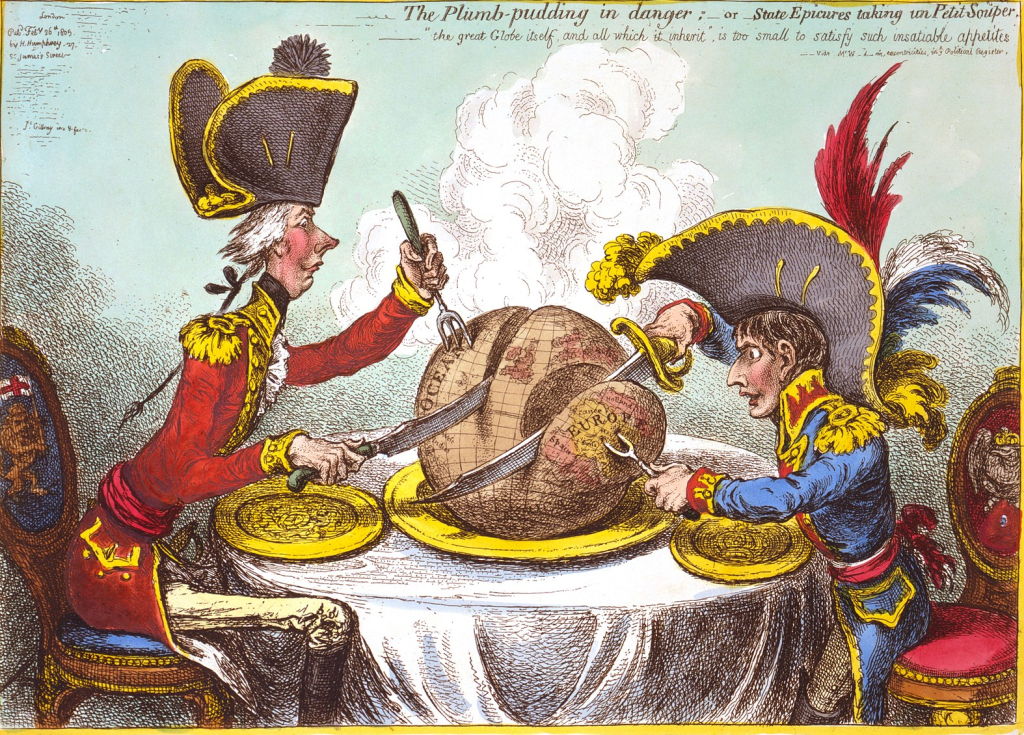
If Not Now, When?
I am infrequently in the classroom these days, mostly teaching high school students over the summer. So I’m poorly positioned to recommend how faculty (or administrators) should respond to what Angus King, the independent senator from Maine, called “the most serious assault on our Constitution in the history of this country.” But this crisis moment inevitably raises for me Rabbi Hillel’s ancient but always invaluable set of nested questions: “If I am not for myself, who is for me? If I am only for myself, what am I? If not now, when?”
Higher education – understood as a community of those who uphold the ideals of free and open inquiry, the critical examination of ideas and ideologies, the independence to teach and learn free from government diktats, threats, and vigilante violence, the value of inclusion and equity, and the willingness to honestly confront our own shortcomings – higher education at this moment needs more than ever to be for itself by standing up for its core beliefs and principles. And this must include providing support to the faculty most at risk from Trump’s attacks: to junior faculty and faculty from minoritized backgrounds who work in areas most impacted by anti-DEI executive orders and who, along with colleagues in STEM fields, face the loss of research funds as well as additional psychological, social and institutional barriers in this new environment; to staff impacted by the termination of federal funding; and to immigrant and trans students who Trump has marked for particularly cruel treatment.
At the same time, if we are only for ourselves, what are we? If we only stand up for our rights as part of an academic community, we will determine our own isolation and potential destruction. The low public perception of higher education is just one indication of our inability, or unwillingness, to surmount our own parochial (if real) concerns and connect with the struggling communities that often surround us. It should come as no surprise that the Republicans assault on higher education has employed Ivy League schools as their favored whipping boy, suggesting that these elite schools represent all higher education institutions and, as such, should be taken down. It’s easy to forget that less than 1% of undergraduates attend Ivy League schools while over 70% attend public colleges and universities. But the Ivy League, with its massive endowments, expansive real estate holdings, and deep-rooted sense of entitlement, is easy to loath, as was proven in last year’s House “antisemitism” inquisitions. (Always overlooked is the fact that these same schools have churned out Republican senators and a current vice president along with the bulk of the nation’s hedge fund managers.) But we will only survive the gathering storm by recognizing and foregrounding those interests and demands that we share with our surrounding communities – for fair wages, good health care, affordable housing, educational systems that work for all, more consideration for our climate future, and the restoration of meaning and community to our lives.
Finally, if not now, when? A few days ago, the editors of the Orlando Sentinel wrote “Donald Trump has erased any doubt that he’s a dictator. It’s perfectly clear that he intends to let no law, court or even the Constitution restrain him…Under Trump 2.0, America has never been in greater danger.” Following the demented attack on Ukrainian president Volodymyr Zelenskyy by Trump and JD Vance, Dmitry Peskov, a spokesperson for the Kremlin, told a reporter from Russian state television that Trump’s foreign policy now “largely aligns with [Putin’s] vision.”
With our democratic system facing monumental challenges, and Washington throwing its lot in with the world’s authoritarian leaders, when do we, who bring our moral and intellectual authority with us into the classroom, interrupt our chemistry and economics lessons to question with our students the path that the country is on? And when do you, the leaders of our schools, colleges, and universities, bring your own moral and intellectual authority to publicly and audaciously defend these institutions as well as American democracy itself? If now now, when?


Pingback: Trump Administration Dangerously Reshapes U.S. Public Schools by Mandating Bias and Ideology | janresseger