Grading: Fairer? Better? Utopia?

Steven Volk, November 8, 2015

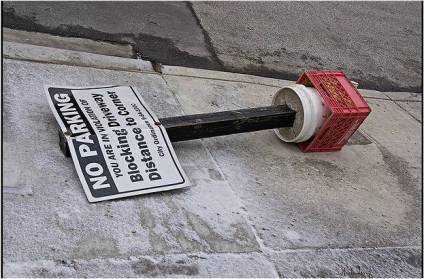
Violate-This-Parking-Dibb-Seth-Anderson

Seth Anderson, “Violate This Parking Dibb,” CC

Clark Kerr, the former Chancellor of the University of California-Berkeley, in one of his many flashes of wit and wisdom, once observed, “I have sometimes thought of the modern university as a series of individual faculty entrepreneurs held together by a common grievance over parking.” The same could probably be said about grading. If there is one thing that we agree upon as faculty, it is an aversion to grading. I am no longer surprised when colleagues tell me that not having to grade papers is what finally convinced them to hang up their spurs and retire.

And it’s not just faculty who complain: grading is an equal opportunity grievance. Grading is not particularly high up on the students’ ten-best list of what they like about a college education. They certainly press us to explain what, precisely, it would take to turn a B+ into an A-. The “why-can’t-they-be-like-we-were” lobby outside of the academy see grade inflation as an indication of how faculty have caved to student demands. The media portray us as spineless, liberal wimps for not dolling out a hefty portion of C’s and D’s. And deans? Well, perhaps the day has passed when they attempted, subtly or not, to make a point by sending around a memo illustrating how the grades we gave compared with others in our department, division, and college.

Continue reading

Teaching International Students: Opportunities and Challenges

Steven Volk, November 1, 2015

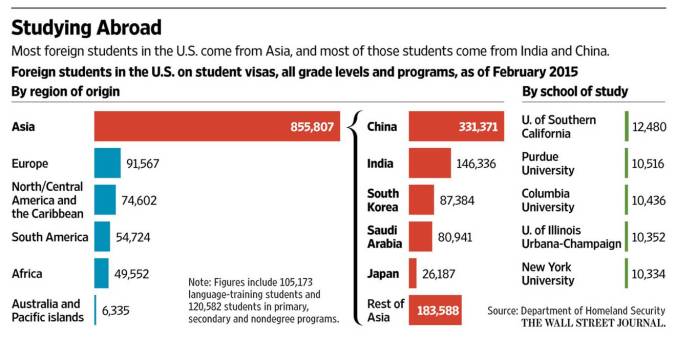
The number of international students* at U.S. institutions of higher education continues to multiply. According to UNESCO, at least 4 million students went abroad to study in 2012, up from 2 million in 2000. If these students were a country, they would be the 125th largest in the world (out of 257). Students are on the move, and many are headed to one of five destination countries: the United States (hosting 18% of the total), United Kingdom (11%), France (7%), Australia (6%), and Germany (5%).

According to a report published earlier this year by the Department of Homeland Security, 1.13 million international students, using an F (academic) or M (vocational) visa, were enrolled at nearly 8,979 U.S. schools in 2015, the vast majority in college-degree programs. That represents a 14% increase over 2014, nearly 50% more than in 2010 and 85% more than in 2005.

Studying-Abroad-WSJ_03-24-15

Credit: Wall Street Journal, March 24, 2015

These students are coming from all parts of the world, but a few countries dominate the charts. In 2012, China sent about 712,000 students abroad to study. India, the Republic of Korea, Germany, and Saudi Arabia also send significant numbers of students to study abroad.

Continue reading

Between Triggers and Bullets

Steven Volk, October 12, 2015

In college and hidingThe waters of higher education have been troubled this first month of the fall semester. Both mainstream and the educational media have focused on the controversies that continue to churn around the use of “trigger warnings,” prior advisories of potentially traumatizing material. The Faculty Senate at American University, with the support of the provost, passed a resolution allowing faculty members to continue to issue “trigger warnings” but only to prepare students to process material, not to excuse them from exposure to it. Students who fear personal reactions to the instructional content will be directed to student support services.

At the same time, the toll of real bullets, fired by applying pressure to real triggers, continues to climb on college and university campuses. In the last two weeks alone, we have mourned the losses from a mass shooting at Umpqua Community College in Roseburg, Oregon and shootings at Northern Arizona University in Flagstaff and Texas Southern University in Houston. Last year, students were killed at Seattle Pacific University and the University of California, Santa Barbara. There were a reported 27 shootings on or near campuses in 2013. I attended a workshop earlier this year led by faculty from Virginia Tech who are still coping with the aftermath of the 32 people who were fatally shot on that campus in 2007.

Continue reading

Paragraphs Take Time; Conversations Take Time

Steven Volk, October 4, 2015

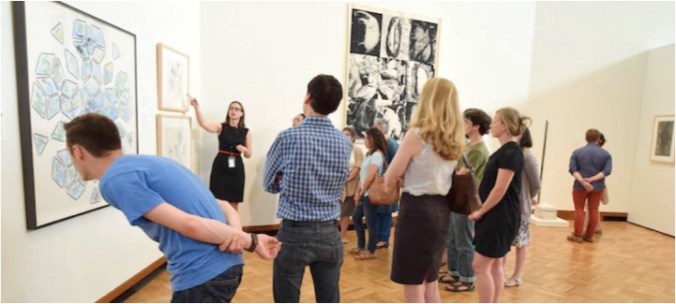
As instructors bring their classes to the glorious Allen Memorial Art Museum, they begin to consider the potential not just for teaching with art, but of teaching through art. Liliana Milkova, the academic curator at the museum, and I have written about the process (“transfer”) whereby the learning that occurs in one domain can be shifted to another. In extended interviews with Oberlin faculty who have brought their students to the museum, we have found that a number of specific skills foregrounded in visits to the Allen are transferring back into the classrooms in a variety of disciplines.

Birkhofer_EJ

Denise Birkhofer, Ellen Johnson ’33 Curator of Modern and Contemporary Art, in Ellen Johnson gallery of Allen Memorial Art Museum

For example, faculty members have observed that the work their students do in the museum often helps them think about the link between evidence and argument in new ways. Some of these realizations originate from the curators’ use of VTS (Visual Thinking Strategy) approaches in the museum. VTS fashions a viewer’s engagement with art through three basic prompts: (1) What is going on in this picture; (2) What do you see that makes you say that; and (3) What more can you say about the object? Having the “primary source” (the painting or sculpture) directly at hand strongly grounds the student’s ability to use evidence to support an interpretation: Where in the painting do you find evidence suggesting that the man is angry? Such lessons from the museum can transfer easily to classroom discussions and written work. Continue reading

Revealing the Secret Handshakes: The Rules of Clear Assignment Design

Steven Volk, September 27, 2015

I’ve often thought that the more we can reveal to our students about why we design our classes as we do, or the more we can suggest the principles that underpin our assignments,  the more they would learn and the better they would do. I probably started thinking this way as a simple reaction against the “You need to do it this way because that’s what I’m asking for” approach, the teacher’s equivalent of the parental “Because!” response to a child’s “Why do I have to?” question. I continue to disclose the architecture of my course design because it offers an opportunity to discuss the way I apply learning theory to instructional design, bringing students in as collaborators in the complex process of teaching and learning. At the start of the semester, I’ll spend some time talking about constructivist theories of learning to explain why I rely more on discussion than lecture. I’m not always sure they fully understand what I’m talking about, and that is somewhat beside the point anyway since I don’t teach learning theory even though it informs my teaching (and my students’ learning). But clarifying the architecture that supports my course design is one way I have of inviting students into the club, as it were. By showing them academia’s “secret handshakes,” I felt I could make them feel both more in control of their learning and somewhat more self-confident about what they could achieve in my class.

Secret-Handshakes

Now I’ve discovered that there is some strong research to support my assumptions. The Chronicle of Higher Education recently ran an article about the work of Mary-Ann Winkelmes and her “Transparency Project.” Winkelmes, who trained as an art historian specializing in Renaissance art and architecture, served as the associate director of Harvard’s superb Derek Bok Center for Teaching and Learning. She moved on to the University of Illinois at Urbana-Champaign, where she organized the Illinois Initiative on Transparency in Learning and Teaching, an assessment project involving 25,000 students at 27 institutions in seven countries. The project aimed at disclosing more precisely what instructors could do to improve student learning.

Continue reading

Take it Outside! Supporting Discussions Outside of Class

Steve Volk, September 21, 2015

Students, if we’re doing our job right, will learn more outside of class than inside. After all, that’s one of the great advantages of being at a residential college where the opportunities to pursue conversations begun in the classroom are abundant. Many of these exchanges will be serendipitous, students sharing ideas during dinner or when laboring away on neighboring treadmills at the gym. (That is what they’re talking about, isn’t it?) As teachers, we are always pleased to hear of extra-mural discussions that we didn’t plan, the study sessions or the students who, finding themselves in the same place in the library, discuss an economics problem they are having trouble with. Not to put too crass a spin on it, but this actually is one of the things that parents and students are paying for when they shell out for a costly residential liberal arts college: the opportunity to be with and learn from talented, creative, bright, and supportive peers.

Dragon

Miniature of the Apparition of Michael. Illuminated by Pacino di Buonaguida, Italy (Florence), c. 1340. British Library.

With all this said, there is surprisingly little research on the cognitive and social benefits of peer instruction in higher education, but what exists is both good and very supportive of the process. I refer in particular to a 2001 volume edited by David Boud, Ruth Cohen, and Jane Samson, Peer Learning in Higher Education: Learning With and From Each Other (Routledge). That book was recently reissued in a Kindle edition (2014), and it’s worth quoting at some length.

“As teachers,” they write, “we often fool ourselves in thinking that what we do is necessarily more important for student learning than other activities in which they engage. Our role is vital. However, if we place ourselves in the position of mediating all that students need to know, we not only create unrealistic expectations but we potentially deskill students by preventing them from developing the vital skills of effectively learning from each other needed in life and work. The skill of obtaining accurate information is not learned by being given accurate information by a teacher but through practice in discerning how to judge the accuracy of the information we receive” (p. 2).

Peer Instruction and Peer Learning

We are fortunate to have a number of superb peer-instruction opportunities at Oberlin, including the Writing Associates, with decades of experience, and the more recently formed OWLS (Oberlin Workshop & Learning Sessions), students who provide peer instruction in most of the sciences and math. These are exceptionally good resources and if your students aren’t aware of their programs, you should fill them in.

Technology can also play a role in bolstering out-of-class peer-learning opportunities, particularly the use of simple on-line applications, such as discussion boards, blogs, or other mechanisms for asynchronous discussions after the class is over. But I’ll save that topic for a later article.

Here I’d like to focus more on the opportunities to support reciprocal peer learning outside of class. (The “Article of the Week” from September 6 focused on encourage peer learning through discussions inside the class.)

Working at DeskThere are a wide range of peer-learning opportunities, particularly at residential colleges, that share similar characteristics: they are mutually beneficial to all students involved, involve the sharing of knowledge, ideas, insights, and experiences among the participants, and underscore the importance of moving beyond tasks and assignments that highlight independent learning (e.g., reading an assigned chapter) and toward interdependent or mutual learning. As opposed to the spontaneous opportunities for reciprocal peer-learning that happen all the time, these are strengthened by planning and proper scaffolding on the part of the instructor.

So, what kinds of skills can be mobilized in peer learning contexts:

  • To begin, the social skills involved in the very act of arranging to meet with others (an act that is easier for some students than others).
  • The skills involved in organizing and planning for the extra-mural session.
  • Collaborative skills: dividing the work among team members and insuring that all are contributing to a collective goal.
  • Communication skills: listening, presenting, challenging, and teaching.
  • Negotiation and conflict resolution skills: dealing with differences of opinion, planning and negotiation.
  • Assessment and reflection skills: giving and receiving feedback, learning to productively and helpfully critique the contributions of others and as well as assessing one’s own input.
  • Skills of critical inquiry: Not that it will happen every time, but often interdependent learning outside of class provides students the time they need to argue and defend their positions, something that may be lacking during the class, and to modify those positions in light of stronger arguments. Discussions outside of class seem more amenable to silences, moment where nothing is said and participants are absorbing what was said and what comes next.
  • And, of course, learning the material. It’s an old saw but nonetheless true: you learn best when you have to teach something, and peer learning is a type of teaching for students.

Working with/through Difference

Reciprocal peer learning can also help students understand the importance of working with (and through) difference. Social context is highly relevant to the learning experience, and students’ learning experiences are significantly influenced by whom they are learning with/from and their own experiences of comfort or safety. Gender, ethnicity, and race, as well as other differences (disability, nationality, sexual orientation, etc.) shape learning contexts and can have an impact on how peers learn from each other. Faculty may choose to address the social context of learning by constructing outside-of-class peer learning activities that emphasize cooperation, collaboration, mutuality, and shared responsibility and where difference is seen as implicit, without directly raising the issue. Or they can draw explicit attention to working with difference from the start, emphasizing the importance of building on difference and recognizing and confronting oppressive behaviors.

Columbia-John-Bull-and-Napoleon-1813

‘Columbia teaching John Bull his new lesson’ (Philadelphia, 1813) cartoon by artists Samuel Kennedy and William Charles,Library of Congress Prints and Photographs Division

What Activities?

While some of the most productive reciprocal peer learning opportunities are unplanned (the student equivalent of faculty parking-lot conversations), others can and should be designed into the course to take greatest advantage of the opportunities. These will work best, as Cohen and Samson argue (“Designing Peer Learning,” chapter 2 in the above mentioned volume), when we understand learning as a social as well as an individual activity, when we foreground the importance of skills such as collaboration and cooperation, and when students come to value the importance of critique, are able to listen (and hear) others, and can develop a capacity to work with their peers’ ideas.

Here are some ideas, taken from the Cohen-Samson chapter and augmented by my own experiences:

  • Preparation for class facilitation: When students are in charge of facilitating classes (usually seminars), they will be required to meet outside of class time (besides meeting with the instructor). These sessions work best when the students have a clear set of expectations for what a successful facilitation will look like.
  • Similarly, small groups can be assigned to present topics in class that require further preparation outside of the class session. These can be aided by allowing some class time for groups to cohere, schedule, and assign tasks for their first meeting.
  • Students involved in research can plan joint meetings with the reference librarians, present each other with work-in-progress reports, feedback and suggestions, or collectively develop questions to bring back to the class.
  • For students involved in community-based projects, time out of class can be used for debriefing sessions (in pairs or small groups).
  • For any writing project, students can bring drafts to workshop with their peers. As assignments near their due date, these sessions can also be used to peer mark the papers, giving the students an opportunity to discuss why they gave the grades they did and the changes they would encourage to strengthen the paper.
  • You can set up out-of-class meetings as “ice-breaking” activities at the start of the semester, a way to help students get to know each other.
  • Faculty can plan out-of-class activities for students in specific classes that explicitly foreground difference around culture-specific or gendered activities, address tensions between the task and the process, or are designed to address group dynamics, and that are formed of groups composed of students who bring different levels of knowledge and experience, the potential for differences in power, or are mixed in terms of race, ethnicity or other differences, if known. The decision to select some strategies might be made with the intention of helping students develop these abilities by working among themselves, whereas others might be made with the understanding that the students will be able to manage these differences effectively so that particular learning outcomes can be achieved without having to address broader issues.
  • Extra-class peer sessions can be used as a substitute for some kinds of tutorials. As mentioned above, peer instructors in writing (Writing Associates) and in the sciences and math (OWLS) are most often available for these purposes, but pairing students of different strengths for extra-mural work can also be a useful approach.
  • Outside-of-class sessions can be used as a strategy to address specific difficulties that are pertinent to your classes: to give students more practice in verbal presentation, to pair English language learners with skilled English speakers, etc.
  • As a means of helping students provide support for each other while they are engaged in individually assessed tasks, allowing for students to hear constructive feedback on their progress.
  • To model work groups that students will likely encounter after college (e.g. in computer science, design-oriented classes, or scientific research).
  • To address non-content related issues that have surfaced in the class: perhaps you are concerned that you have not created the kind of positive learning climate you think is essential for significant learning. It is possible that forming groups of students outside of class to address the issue and return with positive recommendations is one approach to think about. (There are potential downsides to this approach as well, so think carefully about the issues you face before trying this route.)

In summary, we are fortunate to teach in a context that allows for a substantial amount of reciprocal peer learning outside of class. How do you take advantage of it?

Back-To-School Lit

Steve Volk, September 13, 2015

They arrive on our electronic (or real) doorsteps as punctually as the back-to-school adverts, and seemingly in the same quantity. Late August and early September in the United States is the season when the public is called on to contemplate the world of higher education… most often, what’s wrong with it. Today’s (Sept. 13) New York Times is devoted to higher ed. It includes an insightful piece on college tuition by Adam Davidson, a thought-provoking article by Annie Murphy Paul on whether college lectures discriminate (“A growing body of evidence suggests that the lecture is not generic or neutral, but a specific cultural form that favors some people while discriminating against others, including women, minorities and low-income and first-generation college students”), a terrific essay by Edward E. Baptist on the challenges of “Teaching Slavery to Reluctant Listeners” (“Whenever we dredge up the past, we find that the rusty old chains we rake from the bottom are connected to some people’s present-­day pains and others’ contemporary privilege”), and Syreeta McFadden’s contemplation on “Teaching Martin Luther King Jr. in the Age of Freddie Gray.” Read them.
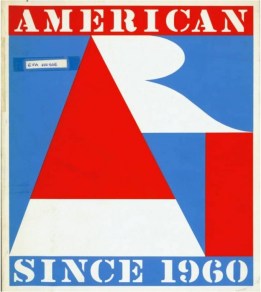
Eva-Hesse-American-since-19601-624x700

Eva Hesse – Exhibition Catalog. Allen Memorial Art Museum (Oberlin College)

Along with these types of stories in the New York Times one encounters a raft of articles that chronicle a student arrival at college for her first semester, describe high schoolers teetering on the cusp of the college-decision-year, follow parents unsure of whether they can afford the university that has plucked their daughter’s heartstrings, and sermonize on how higher education has sold it soul.

And then there is the burgeoning journalism (back-to-school lit, I call it) that falls into the subgenre of “What’s-The-Matter-With-Kids-Today,” a nod to “Bye, Bye Birdie” of Broadway fame (“Why can’t they be like we were, perfect in every way?”). These are the articles that lament the “The Coddling of the American Mind”, the rise of intolerance on campus, or, in the latest to appear, and in which Oberlin takes pride of place (The Atlantic, Sept. 11, 2015) , the spread of a new “victimhood” culture, an argument first described in the research of two sociologists.

There is much that can be said about the issues raised in these latter articles, and I would hope that faculty, staff, and students can discuss them further in a variety of settings. Here, I will only say that while many of us are confused or upset or angered by what not only appears to be, but is in specific instances, a fundamental disregard for the principles of academic freedom, we should also be aware of the context in which these articles continue to appear. Not to discount some of the arguments made, nonetheless the tendency in some of the reporting to generalize a relatively few examples of specific behaviors into a new student culture raises the question of how widespread these trends are within higher education. Similarly, to dismiss what scholars have found to be real and significant barriers to some students’ learning (what scholars have termed “microaggressions” ) by decrying or ridiculing the fact that a few students have deployed the concept in ways that are no longer recognizable or defensible, does not encourage a deeper understanding of what are important issues, and principles, for those of us who teach and interact with students on liberal arts campuses. Nor do these articles open the way to a productive discussion of the subject, something which is desperately needed. (Those looking for a well-researched introduction to the topic of microaggressions, for example, should consult the work of Derald Wing Sue of Teachers College, Columbia University – you can start here and here – or Kevin Nadal of John Jay College, CUNY – try here.) There certainly is much which we can, and should, discuss, including what I would term the emergence of a “safety” narrative on some campuses (usually elite, selective colleges or flagship university), but the seeming intent of the back-to-school-and-the-liberal-arts-colleges-have-all-gone-crazy articles to ramp up outrage against the education that takes place in these colleges should be interrogated along with the behaviors they describe.

Bosman-The-Signal-624x797

Richard Bosman, The Signal, from the Olive Press Print Portfolio II, Woodcut. Allen Memorial Art Museum (Oberlin College)

We (the approximately 130 residential liberal arts colleges that remain) are a tiny percent of the overall higher education framework in the United States today (just over 2%, to be exact). There are nearly 20 million post-secondary students in the U.S. today, and many are struggling with debt, thinking about future employment, juggling studying with jobs and families, and just trying to learn in a political environment which disparages teachers and belittles actual knowledge. While writers in the Atlantic enjoy skewering liberal arts colleges as hotbeds of “political correctism” and left-wing students run amuck, and while we can share the anxiety of those wondering how any but the very rich will be able to afford a university degree, we are, in fact, doing many things right, and the back-to-school season is a good time to remind ourselves of this. Even researchers who have launched the most serious critiques of higher education for not adding to students’ capacity to think critically (Arum and Roska’s Academically Adrift, for example) have concluded that liberal arts colleges are getting it right.

So, what is it we do (and, I could add, why does it seem to make our detractors so angry)? To help answer this question, I turn to my polestar in these matters, John Dewey, and to a lovely article that the philosopher Richard Rorty wrote in 1989 (“Education as Socialization and as Individualization”). In the article Rorty offers an explanation of why liberals and conservatives see the purposes of education so differently. Conservatives, he suggests, stress the importance of education for socialization while liberals argue in favor of education for individualization. (Interestingly, he observes, in the United States, education up to the age of 18 or 19 is mostly a conservative stronghold; it’s mostly about socialization, “of getting the students to take over the moral and political common sense of the society as it is.” Higher education, on the other hand, has been mostly a liberal’s domain, about encouraging Socratic skepticism, a place where “we hope that students can be distracted from their struggle to get into a high-paying profession, and that the professors will not simply try to reproduce themselves by preparing the students to enter graduate study in their own disciplines.”
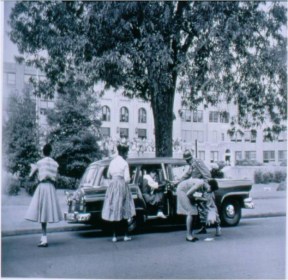
Withers-Little-Rock-9-624x605

Ernest C. Withers, The “Little Rock Nine” first day of school, Little Rock, Arkansas, 1957. Allen Memorial Art Museum (Oberlin College)

Dewey’s approach, Rorty writes, wasn’t based on either conservative or liberal precepts. He offered “neither the conservative’s philosophical justification of democracy by reference to eternal values nor the radical’s justification by reference to decreasing alienation.” For Dewey, the promise of an education was its democratic value as an on-going experiment engaged in…by us. Dewey asks that we “put our faith in ourselves – in the utopian hope characteristic of a democratic community…” For Dewey, hope, “the ability to believe that the future will be unspecifiably different from, and unspecifiably freer than, the past – is the condition of growth.”

We, on campus, have been thinking much about both the value and valence of hope, as we pondered the words of Bryan Stevenson, of the Equal Justice Initiative, who was on campus last week and continue to discuss Ta-Nehisi Coates’ Between the World and Me in our reading groups.

For his part, Rorty sadly observed that there now are certain aspects of the U.S. educational establishment that Dewey couldn’t have foreseen, but that we should not hold this against his vision of hope. Dewey “could not have foreseen,” he wrote, “that the United States would decide to pay its pre-college teachers a fifth of what it pays its doctors. Nor did he foresee that an increasingly greedy and heartless American middle class would let the quality of education a child received become proportional to the assessed value of the parents’ real estate.”

Rorty is a Deweyan, and, as he put it, “We Deweyans think that the social function of American colleges is to help the student see that the national narrative around which their socialization has centered is an open-ended one. It is to tempt the students to make themselves into people who can stand to their own pasts, as [Ralph Waldo] Emerson and [Susan B.] Anthony, [Eugene] Debs and [James] Baldwin, stood to their pasts. This is done by helping the students realize that, despite the progress that the present has made over the past, the good has once again become the enemy of the better. With a bit of help, the students will start noticing everything that is paltry and mean and unfree in their surroundings. With luck, the best of them will succeed in altering the conventional wisdom, so that the next generation is socialized in a somewhat different way than they themselves were socialized…To hope [this way] is to remind oneself that growth is indeed the only end that democratic higher education can serve and also to remind oneself that the direction of growth is unpredictable.”

Rivera-Open-Air-School-624x584

Diego Rivera, Open Air School (1932), Lithograph. Allen Memorial Art Museum (Oberlin College)

There are politicians and pundits, and, yes, some administrators, who, when reading the back-to-school lit which will make its way to their desktops, think that higher education is too important to be left in the hands of professors, let alone allow the students to have a voice in it. But I think of what it is that we have done and what we should continue to do. And I am reminded of what the Civil War historian, James McPherson, pointed out in his 1975 book, The Abolitionist’s Legacy (Princeton): an extraordinarily high percentage abolitionist leaders were shaped by their colleges. In a sample of 250 antislavery leaders, nearly 80% either had college degrees or spent time in college. This, at a moment when less than 2% of the overall population was college educated. If we are doing what we should be doing, our students, even those who might not get everything right as they attempt to cope with the world around them, what they bring with them, and what they are learning, will succeed in “noticing everything that is paltry and mean and unfree in their surrounds” – and try to change it.
Let’s Talk About It: Fostering productive class discussions

Steve Volk, September 6, 2015

There are no general rules for stimulating a good class discussion…OK, so there are. But they are not so much rules as a set of understandings, things we probably all know but don’t always remember to practice. Of all the topics that faculty are interested in, particularly new faculty, this is the one I get most often. I’ve written about this before (for example here and here), but it’s a good question to consider again.

Do you believe? I don’t think we would be here if we didn’t believe this, but to state the obvious: Discussion (by which I mean both the back-and-forth with students that takes place within a more lecture-driven pedagogy and longer discussion-centered classes) will probably not go the way we hope if we don’t believe there is any pedagogical utility in student discussion, If we solicit student input only when answering our questions or when asking us to clarify points we raise in lecture. That certainly was the standard when I began teaching; I no longer think it is.

Good discussions are built on an understanding that students learn by taking an active part in their own education. Paulo Freire, the Brazilian educator, criticized what he called the “banking theory” of education in which “the students [and he was talking about adult learners] are the depositories and the teacher is the depositor. Instead of communicating, the teacher issues communiques and makes deposits which the students patiently receive, memorize, and repeat. This is the ‘banking’ concept of education, in which the scope of action allowed to the students extends only as far as receiving, filing, and storing the deposits…But in the last analysis, it is the people themselves who are filed away through the lack of creativity, transformation, and knowledge in this (at best) misguided system. For apart from inquiry, apart from the praxis, individuals cannot be truly human. Knowledge emerges only through invention and re-invention, through the restless, impatient continuing, hopeful inquiry human beings pursue in the world, with the world, and with each other.”

Discussions work best when we see them as a central part of student learning and make them an important aspect of our pedagogies.

Habits form quickly. We all know that by the second class of the semester, 90% of the students will be sitting in the same seat they occupied in the first class. And this will continue all semester; it becomes a matter of habit. The same is true about talking and listening. Many (if not most) students will quickly fall into the habit of talking…or remaining largely silent. In our smaller seminars, particularly the First Year Seminars, we almost always have every students speak during the very first class: they may introduce themselves, suggest why they are interested in the class, discuss some aspect of their background, or speak of what they hope to get out of the class the class. Those are good things to know, but the basic idea is to get the students talking so that they quickly feel comfortable with their own voices.

We don’t do the same in larger classes, often because there are too many people for everyone to speak, but the same proposition holds true. If students learn from the start that their primary role in class is to listen and not speak, it will not prove surprising that they won’t engage as easily when we do ask them to enter into a discussion  with their classmates. (To be sure: there are always those who are not only willing to talk, but often dominate any conversation, leaving little room for others – but more on strategies for dealing with this later.)

The bottom line is that if you understand that discussion is essential to student learning and want to encourage rich discussions in your class, make sure that your students develop the habit of talking from the very start and try to build in opportunities for discussion continually, not just on one day a week or only at the end of the lecture.

Slow is better. Except in seminar settings, and even there, student voices are most often encouraged when we ask students to answer a question we pose. Certainly there are a lot of times we ask so-called “known answer” questions as a way to discover whether they did the assigned reading or can fill in a specific piece of information (although asking such questions can produce a deadening stupor, as anyone familiar with Ferris Bueller’s Day Off will recall: “Anyone? Anyone?”).

More often we ask questions which require students to think more deeply about an issue but don’t necessarily want to break the class into smaller groups to discuss them. In these cases, the answer is neither obvious nor easy, and unless you want the same hands to shoot up each time, you need to give the students time to think and consider before answering. You can say, “wait a few seconds before answering,” but you’ll still get the same hands going up. Instead, have them write their answers or briefly discuss with the person next to them. Not only does that give them time to think, but it also makes it easier for you to call on a student who doesn’t normally talk in class. “Katie – I see that you’re writing away. What did you come up with?” (There are teachers, to be sure, who adopt what I would call the “enforced” Socratic method, like Professor Kingsfield, the contracts law professor in The Paper Chase.  And there is some value in that method – not the Kingsfield humiliation approach, but as a way to see that students come to class well prepared.) But understanding that students need time to prepare responses to complex question (as do we), is one way to get broader participation and more informed responses while avoiding both “Anyone-Anyone” moments and discussions that always revolve around the same few students.

Anatomy-Poster-French-head-238x300Save the harder for later. I have noticed that in seminars in which students are expected to take the lead in discussions, they often start the class by asking what I would consider to be the most difficult questions, the kinds of questions that usually require the students to synthesize the subject matter and come to a conclusion before the discussion has even begun.  And I also realized that I often did the same thing: I would open the discussion (at 9:00 AM, no less) with a question that not only couldn’t be answered then, but was certain to stop any discussion dead in its tracks.

When planning for student participation in class, whether a lecture-centered class or a discussion-based seminar, try to begin with those questions that are both easier to get at (perhaps descriptive or informational questions) and build to the more analytic, synthetic questions as the student, you, and the discussion get warmed up. You will generate more participation and bring along more students.

Good scaffolds make good buildings. Moving from the back-and-forth question and answer of a lecture class to a seminar-style discussion or any class in which student input is primary, the best chance to generate a productive discussion is by helping students prepare with clear expectations and prompts to guide them through the readings or other homework. What should they be looking for? How should they be preparing for the discussion? Will they be expected to lead the discussion? Will you set the pattern of staying (largely) silent or can they count on you to “rescue” them when the discussion stalls in silence?

And when you give students a set of prompts to be thinking about, try to stick to them when you open the discussion. More than once I realized that I gave my students a set of questions to help them prepare the reading and then I asked a completely different set of questions in class. It’s not that we have to stick unalterably to a scripts that we have written, but if students see no relation between what you’ve asked them to think about and what you’re asking them to talk about, they are not likely to generate a good discussion.

Responsible talking, responsible listening. Whether in a seminar setting or having divided your class into smaller groups, it is useful to employ some practices to support the discussion. There are two key roles in the discussion section: responsible talking and active listening. To support the first, give the students a sense of what it means to be a responsible participant in the group. Obviously, it means being prepared for the discussion by having completed and thought about the reading, trying to stay on topic, and encouraging others to talk as well. It also means attempting to move the discussion forward. Which brings up active listening. A good discussion is built on the fact that students are not (just) queuing up with a Medical-Illustration-Hearing-NLM-211x300set of things they want to say even though those points have already been made. They are listening to their colleagues in an active way so that even if they repeat some of what has been said, they also try to move the discussion to a new point. (For tips on active listening, see here.) You can do some things to support this by having students adopt (and exchange) certain roles in the discussion. You might want one student to be a note taker and another to be in charge of facilitating the discussion or reporting back to the class. (You can find different report-back strategies here.)

Unless you assign regular discussion groups at the start of the semester, you can encourage more participation by arranging discussion groups to have different students in them each time, particularly if you find that students always sit in the same seats and you tend to form discussion groups by having students talk to those sitting closest to them. While quick discussions will inevitably rely on turning to one’s neighbors, for longer discussions you might want to mix the groups up, setting them up by “counting-off” or other techniques. The latest suggestion I read on how to do this comes from George Williams in ProfHacker who uses playing cards to establish groups in a large class. (For example, to set up groups of four, pass out the cards and have those who draw the same number form a group. This may seem an unnecessary waste of time, but students might also find it intriguing.)

Finally, if you are interested in different ways to assess student discussions, please refer to the Article of the Week for February 18, 2013 (Assessing Student Discussions). You can find this on CTIE’s Blackboard site.

Do you have other ways to encourage student discussions? Share them with us by posting a comment.

Creating the World Anew: Thoughts on a New Semester

Steve Volk, August 30, 2015

gracel-lee-boggs_robin_holland-624x416

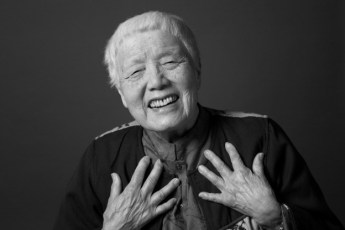
Grace Lee Boggs. Photo: Robin Holland

Grace Lee Boggs celebrated her 100th birthday on June 27. For those who don’t know her, Grace Lee Boggs is a philosopher, activist, teacher, and an inspiration. Her father, Chin Lee, ran a restaurant in Toishan, China, before emigrating to Providence, RI, where Grace Lee was born. Facing the enormous obstacles of race and poverty, she was nonetheless able to enroll in Barnard College on a scholarship. There she followed some inner voice that pointed her towards philosophy. She went on to complete her doctorate in philosophy at Bryn Mawr.

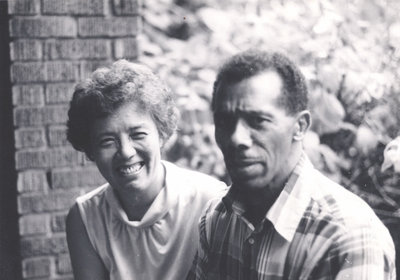
In the 1940s there were no jobs for a Chinese American woman in the academy, and certainly not in philosophy. So when she moved to Chicago in the early 1940s, it was for a $10 a week job at the University of Chicago’s library; she lived rent-free in the basement of a nearby building. Grace Lee Boggs, an adherent of Hegel, has long argued that one has to suffer the negative in order to make progress, that the greatest lesson we can learn is to “make a way out of no way.” And so for her, the reality of living in a rat-infested building was not without its positive outcomes. Her determination to address her own basement circumstances led her to a group of African American activists who were fighting the same miserable housing conditions. She soon became a tenants’ rights activist, and eventually met and married James (Jimmy) Boggs, a black auto worker and labor activist.

Grace-and-James-Boggs

Grace Lee and James Boggs

They moved to Detroit in 1953, where she still lives, always a philosopher, always an activist, always an educator working with others to “make a way out of no way.” Grace Lee Boggs has been an active participant and valued voice in the movement for civil rights, women’s rights, workers’ rights, and black power. In 1994, she co-founded Detroit Summer, “a multi-racial, inter-generational collective” that functions as a training ground for activists, attracting young people across the country each year.

I’ve been thinking about Grace Lee Boggs this week as I wrestle myself into the proper frame of mind for starting a new semester, a process which invariably reminds me of the importance of what it is we do as teachers. In the process, I came across a fairly recent interview with Boggs with Krista Tippett’s on the latter’s “On Being” podcast. Boggs spoke about what I would call the “physics” of social change. Referencing the work of Margaret Wheatley , she “pointed out how Newtonian science and scientific rationalism has made us think of life and reality as made up of particles. [But] quantum physics,” she offered in contrast, “gives us the opportunity to look at change in a very different way. Not in terms of mass but in terms of organic connections and emerging changes, of changes that take place at a lower level so that at a mass level [they] have more permanence and more reality.”

Grace-and-James-Boggs-1990s

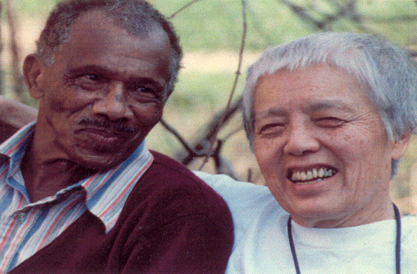
Grace and Jimmy Boggs – 1990s

Boggs’ analogy struck home, positioned as I am (and as we are) at the entry door to the semester. In her strong, deeply intelligent, century-old voice, speaking from the heart of Detroit, a city kicked to the curb by the wealthy and powerful, she argued that it was an unparalleled time to be alive, the best of times. While she lamented that we “no longer recognize that we have within us the capacity to create the world anew,” she affirmed that “there’s something about people beginning to seek solutions by doing things for themselves, by deciding that they are going to create new concepts of economy, new concepts of governance, new concepts of education, and that they have the capacity within themselves to do that.” Grace Lee Boggs, an activist for 75 years, looked back at her early years in the struggle. Recalling lessons learned from Hegel, she reflected on the difference between the possible and the necessary. In the 1960s, she observed, she and other radicals thought they should address only what was necessary. Now she believes that focusing on the possible is “so much richer” because it demands creativity and imagination, and it is imagination that opens up the world that you can bring into being.

Our work, Boggs reminded me, is the work of opening the possible to, for, and with our students. It is, to return to Hegel, helping them understand the difference between knowledge and wisdom. “The goal to be reached,” he wrote in The Phenomenology of the Mind, “is the mind’s insight into what knowing is. Impatience asks for the impossible, wants to reach the goal without the means of getting there. The length of the journey has to be borne with, for every moment is necessary…”

David Gooblar’s most recent “Pedagogy Unbound” column in the Chronicle of Higher Education suggested that “for our students, particularly the first-years who are right now in a near frenzy of anticipation for their college careers to begin – we [teachers] are the university.” Not the administrators, coaches, or buildings. I don’t actually agree; our students will come to define the college and their years here in a myriad of ways, from the intellectual engagement of the classroom to the thrill of performing on Hall Auditorium’s main stage, or in Finney, or on the athletic fields. For many, college will be the quantum mechanics of combining with others to make “organic changes.” But I do agree with him that “we are uniquely invested with the power to shape our students’ college experience” as well as their ideas about what their purpose in life might be. As Henry Giroux has written, pedagogy is an act of intervention, a commitment to the future. It’s always good to remember that through our interventions, we can help our students explore the idea of the possible, appreciate the difficulty, as well as the pleasures, of the journey to wisdom, and encourage in them the creativity and imagination that will carry them to own their education and shape their future.

Page-divider-624x70
I always turn to two sources as particularly useful when thinking about our incoming students. Our own schools are eager to give us data on what states and countries our students hail from, how well they did on their SAT’s, and how many edited their high school newspapers.  The Chronicle of Higher Education publishes an “Almanac” each August that gives a broader sense of incoming students (always reported with a one-year delay; this year’s Almanac, for example, reports on “Freshmen at 4-Year Colleges, Fall 2014.” (Counting all undergraduates, some 18.5 million students were enrolled in 2- and 4-year programs in the spring of 2015, about 13 million of whom were in 4-year institutions.)

So, looking just at the first years, what can we say about first-year students?

  • 66.7% are White/Caucasian; 12.8% Asian American/Asian; 11.1% African-American/Black; 16.6% Latino (including Mexican-American/Chicano, Puerto Rican, and other) [All classifications are from the Almanac.]
  • 13.5% of entering students come from families earning less than $25,000 a year and 41.8% from families earning $100,000 or more.
  • Most (47.2%) defined themselves as “middle of the road” politically, with 31.7% selecting “Liberal” or “Far left,” and 21% choosing “Conservative” or “Far right.”
  • In their last year of high school, in an average week, 57% spent 5 hours or less studying; 48% spent less than one hour working for pay; 55.7% spent less than one hour reading for pleasure.
  • 61.3% reported that they tutored another student “frequently” or “occasionally” during the last year, while 43.1% admitted falling asleep in class, and 52.5% failed to complete their homework on time.
  • This is always one of my favorite data points: 71% placed themselves in the “highest 10%” or “above average” in terms of their “academic ability.” Hmmm. On the other hand, only 47.5% put themselves in those two categories when evaluating their math ability and 46.1% in terms of their writing ability.
  • They deem themselves, by very large majorities, “very” or “somewhat” strong as regards empathy, “tolerance of others with different beliefs,” or their ability to work cooperatively with diverse people.
  • What did they see as “very important” reasons for going to college? 86% said it was “to be able to get a better job” and 73% “to be able to make more money,” while 47% said it was to “make me a more cultured person.” Just so we’re not too disheartened, 82% said that it was very important “to learn more about things that interest me” while at college!

My other go-to source is Beloit’s “Mindset” list, a yearly list that points out what traditional-age students entering college that year would not have experienced or known. For current first-year students, most of whom were born in 1997, here are a few tidbits that caught my eye.

Since our incoming students have been on the planet:

  • Google has always been there with them, as has South Park, hybrid cars, and Harry Potter. The Lion King (Julie Taymor ’74) has always been on Broadway; Poland, Hungary, and the Czech Republic have always been members of NATO; and Hong Kong has always been under Chinese rule.
  • Our incoming students have never had to lick a postage stamp, could always get Phish Food from Ben and Jerry’s (Jerry Greenfield ’73), watch CNN in Spanish, and tune in to “This American Life” (Alex Bloomberg ’89, producer). And the New York Times was always printed with color photographs!

Have a great semester!

Reflection and the First Week of Classes

Steve Volk, August 23, 2015 (edited, augmented, and revised from Jan 31, 2014)

One of the things that I most enjoy about a life in teaching is the semi-annual prospect it provides to start anew. Whether we follow through on them or not, the resolutions we make at the start of each new semester offer an opportunity to reflect on what went well and what went pear-shaped during the last semester, as well as a chance to institute some changes to address the shortcomings.

Seeger

Pete Seeger, 1964 anon for BBC Tonight In Person. Carl Guderian, CC-Flickr

There’s a boat-load of hopefulness built into this semi-annual reset button, and I was reminded of the importance of this when reading the 2014 obituary of Pete Seeger, a personal hero who visited Oberlin many times during his long career. “The key to the future of the world,” he observed in 1994, “is finding the optimistic stories and letting them be known.” This doesn’t feel much like a time for optimism, but I’ve long believed that to be a teacher is in its essence to be an optimist. I’m not sure what we’re about if not preparing our students to take ownership of their learning and craft their own lives, so as to make a better future for themselves, their communities, and the world we inhabit. And that is an act of optimism.

So, how to begin…again? I often post “first-week-of-the-semester” advice at the start of the semester, and clicking back to some of them now might provide some ideas. For example, how to make plans now to manage the stress you know is coming; how to create an inclusive classroom in which all of our students can listen to and hear each other in the midst of very difficult conversations; or how to create an active learning environment in your classroom.

First-Day-VideoA few years ago I prepared a short (10 min.) video on the First Week of Classes, and although a few points are dated, you still might find some good advice there.

While thinking of what to say in this article, I awoke to something this morning in one of my favorite blogs, Brain Pickings by Maria Popova, and it struck me as immensely useful as we prepare our classes. Popova was writing about the artist, Louise Bourgeois, whose massive spider sculptures (among her many spectacular creations) caught my attention some years ago. In a 1938 letter Bourgeois advised her friend and fellow artist, Colette Richarme, that “You must put the essence of what you want to say into a painting. The rest is arbitrary. Chosen with discernment, but chosen, and choice involves elimination. Once the drawing is established and composed, you compose the other values in the same way.” Not a bad bit of advice about teaching: we try to put the essence of what we need (not want) to teach into the course, and that always involves elimination. We choose with discernment,  but we have to put the essence of what we want to say into our classes.

Bourgeois--624x436

Louise Bourgeois. Photo by Topyti, “Shadow of a Doubt,” CC-Flickr

Expectations and Reflection

So, returning to the first week of classes, here’s a suggestion. Sometime during the first week of classes, hand out an “Expectations Reflection Paper.” Many of us do this, or engage in a similar exercise, both to help students think about their expectations for themselves and the course and for us to learn more about them (and what they think they have signed up for. It can be a sobering experience to realize that their expectations and your syllabus aren’t in any particular alignment.)

You can set aside some time in the class for students to respond to the assignment; I have them work on the assignment outside of class. they are required to turn it in at the start of the next class. Some faculty ask students to put their names on the assignment, others explicitly don’t. If you want to use the exercise as a way to get to know your students, you’ll need to know who authored the papers.

I always have them put their names on the paper, and make the reflection paper a course requirement, for another reason. I collect and read the reflections at the start of the semester and then hand them back to the students at the end of the semester. This time I ask them to think about what they wrote earlier and to reflect on what they feel they have accomplished, where their expectations might have fallen short, and what they learned about their own learning in the process.

ulysses_paladino1

Mimo Paladino, illustration for 1998 folio edition of James Joyce’s Ulysses

What to ask? Here are some starting ideas:

  • Why are you interested in this subject, or what prompted you to take this class? (Don’t be afraid to admit that you need it to fulfill a requirement.)
  • Have you taken other courses in this area or have you had other experiences (in classes or outside of the classroom) that you think are relevant?
  • What content knowledge do you hope to gain by taking this class?
  • What skills do you hope to gain by taking this class?
  • How do you learn the best? Formal lectures, class discussions, small group discussions, readings, assignments, practical engagement, group work, other?
  • Do you know of anything that might get in the way of your full participation in this class and which you can disclose? For example: Is this a particularly busy semester for you? Health issues? Family issues? Part-time work? Worries about your community or events in the world beyond the college? Lack of particular skills? Shyness? Please list anything that you feel comfortable listing, anything you think I can help with or should be paying attention to.
  • Do you have any particular worries about this class that derive from these concerns? Anything about the reputation of the class or what you have heard from other students?
  • What can you tell me that can help me remember you? (E.g., “I’m the one with pink hair who loves Bach and always sits in the back row.”)
  • In this class, do you expect to work more, less, or the same amount as in other courses?
  • Are you doing anything else this semester (or in general) that relates to or corresponds with the subject of this course (either in terms of what you are studying or things that you are doing outside of your classes)?

Finally, there are two questions that I always include:

  • What one thing can I do to help your learning in this class?
  • What one thing can YOU do to help your learning in this class?

Do you have other suggestions? Send them along.