If Not Now, When?

In a recent New Yorker article, Susan Glasser wondered “Why aren’t we in the streets?” As Trump — who now refers to himself as a “king” and toys with the idea of serving a third term in the White House — and his co-president Elon Musk rip through the government, mocking legal barriers, scolding allies, and shredding the lives of millions, we remain, Glasser laments, “quiescent.” Perhaps we have simply been “overwhelmed by the unimaginable becoming real,” as M. Gessen suggested.

While the abysmal cruelty of Trump’s attacks on immigrants and the trans community is intended to isolate and terrify those vulnerable communities, his campaign to dictate what can and cannot be taught in our nation’s schools threatens to reinforce the structures of white supremacy and undermine the very purpose of education itself.  

Consider the email recently sent by the Provost of the Naval Academy, Samara Firebaugh, to her faculty. In it she instructed faculty to comb through course materials to extirpate such offensive words as “diversity,” “minority,” “belonging,” “bias,” “representation,” and “oppression.” “Do not use materials,” she commanded, “that can be interpreted to assign blame to generalized groups for enduring social conditions, particularly discrimination or inequality… Do not employ readings or other materials that promote the concepts of ‘gender ideology,’ ‘divisive concepts,’ ‘race or sex stereotyping,’ and ‘race or sex scapegoating,’ including critical race theory, intersectionality, privilege, patriarchy or other such theories.”

Continue reading
Muzzling the Debate

Retirement offers many opportunities: sleeping later in the mornings (haven’t figured that one out); learning to paint (not really interested); becoming fluent in a new language (没有); streaming more television (Yes!). But in large part, being away from the daily demands of teaching has open the possibility of reading more deeply in fields of history that were outside my own.

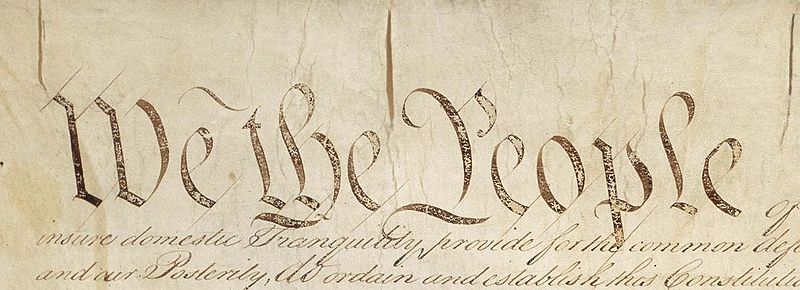
U.S. history has been at the top of that list, particularly the early republic, slavery, Black history, and Black struggles for equality and dignity. Ever since reading the 1619 Project a few years ago, I’ve tried to engage the historiographic debate about the shaping of the Constitution: was it “abolitionist” or “pro-slavery”? Sean Wilentz’s 2015 op-ed in the New York Times and David Waldstreicher’s response in The Atlantic nudged the debate over to non-specialists as well, and I followed the rolling, often heated, discussion in the pages of the New York Review of Books (see, for example, here and here), among other publications. That conversation, and a recent review by David Blight in the NYRB, encouraged me to pick up James Oakes’ The Crooked Path to Abolition: Abraham Lincoln and the Antislavery Constitution (Norton 2021).


Reading The Crooked Path led me to reflect, once again, on how historians think about contentious issues in the histories we explore. In the first place, I understand that I have not read deeply enough in the field to draw strong conclusions of my own on the central issue of whether the U.S. Constitution was “pro” or “anti” slavery, although I’m persuaded by Oakes’ superb book that it was both. Second, I found it affirming and energizing that historians who have been deeply immersed in the subject are not just capable of, but willing to modify their analysis in the face of more reasoned arguments and new evidence. As Blight observed: “We may be dead certain, or even mildly sure, about facts and the stories we tell about them, but our craft requires us to remain open to new persuasions, new truths.” Finally, and because of both points, I find it utterly infuriating that these rich debates will be shut out of classrooms in dozens of states because their instructors, quite simply, are forbidden by state law from raising them. Under the banner of opposing the “indoctrination” of students, hundreds of bills have been introduced to ensure that students will be prevented from grappling with the debates that shaped the nation’s history and continue to influence its evolution.

Continue reading

The Past as Way Forward: Finding a “Useful History”

Steve Volk, March 13, 2017

Reparation-and-ReconciliationA group of faculty, staff, and students sat down together the past two Mondays to discuss Christi Smith’s Reparation & Reconciliation: The Rise and Fall of Integrated Higher Education (University of North Carolina Press, 2016). Smith is a visiting assistant professor in sociology at Oberlin, and, of course, she took part in the conversation. Her book examines three colleges (Oberlin, Berea, and Howard) that early on placed interracial coeducation at the center of their institutional missions. The book examines what impelled the colleges to make this choice and why, by the end of the 19th century, all three eased away from that goal. By the turn of the 20th century, Howard dedicated itself to the task of educating the black elite, Berea focused on Appalachian whites, and Oberlin, finding itself, as with the others, in a competition for donors and students, sought advantage by marketing itself more as an elite Eastern institution, and less as an avatar of interracial progress.

There is much to relate about the book and the discussions it generated, but I will limit myself to three topics. While these issues are of particular importance for Oberlin, I have no doubt that they will be relevant for many other institutions which, prodded by student protests and national conversations, are seriously considering the role that race and racism played in their institutions’ history and how these factors continue to shape their present. Continue reading

“You don’t pray for an easy road; you pray for a strong back.”

Steve Volk, November 14, 2016

Frank Tuitt, professor at the University of Denver and organizer for the Making Black Lives Matter in Higher Education event. Photo: Andre Perry

Frank Tuitt, professor at the University of Denver and organizer for the Making Black Lives Matter in Higher Education event. Photo: Andre Perry

More than 250 black faculty members, administrators, graduate students and allies gathered in Columbus a day after Election Day to offer their perspectives in a long-planned session titled “Making Black Lives Matter in Higher Education in Challenging Times: A Conversation for, by, and about Black Faculty, Graduate Students, and Staff-Administrators.” In response to the question, “What has it been like to be a black faculty or staff member on a predominately white campus in the era of Black Lives Matter?” one professor responded, “You don’t pray for an easy road; you pray for a strong back.”

I wasn’t at that conference but I was thinking about the strong backs we will need as I drove down to Louisville, KY, on Wednesday for the annual meeting of the POD Network, a group of some 1,000 “faculty developers.” I’ve never much liked the concept of “faculty development,” mirroring my objections about “developed” and “undeveloped” countries, as if some countries — or some faculty — just needed to be “developed.” But that’s what our job is called, those of us who run teaching and learning centers, work in instructional design, and generally collaborate with faculty, graduate students, students and staff around issues of pedagogy and the scholarship of teaching and learning. Truth be told, I hadn’t wanted to go. I just wanted to sit in a dark corner of my house. But I figured I could get something out of it, and, now back at home, I realize that I did. It was healing to be in a room of hundreds and hundreds of people who care about the values of diversity, inclusion, social justice, and, frankly, education.  It was healthy to be at a conference where the president of the POD Network used every opportunity to remind us of the values of the organization: Continue reading

Between the World and Our Students

William Blake, "America a Prophecy," New York Public Library, Henry W. and Albert A. Berg Collection of English and American Literature.

William Blake, “America a Prophecy,” 1793. New York Public Library, Henry W. and Albert A. Berg Collection of English and American Literature.

Another hot summer of discontent dogs our heels as we prepare for the start of classes. It has been two years since Michael Brown was shot by a policeman in Ferguson, 18 months since a grand jury sitting in St. Louis County refused to indict officer Darren Wilson for his death, sparking protests in 170 cities across the United States.

Two days prior to the grand jury’s verdict in Missouri, 12-year old Tamir Rice was shot to death by officer Timothy Loehmann two seconds after Loehmann and a second officer slammed their squad car to within a few feet of the young boy playing with a toy gun in a Cleveland park. A grand jury convened by the Cuyahoga County prosecutor refused to indict either officer in the case.

These two were a small part of the hundreds of cases of black men, and women, killed by police in the past two years.

The death roll, sadly, infuriatingly, continued to grow over this past summer with, among others, the shooting of Sherman Evans in Washington DC (June 27), Alton Sterling in Baton Rouge (July 5), Philando Castile in suburban St. Paul (July 6), Earl Pinckney in Harrisburg (Aug. 7); and 23-year old Sylville Smith in North Milwaukee (Aug 13). According to an on-going project by the Washington Post, approximately 28% of the 587 individuals killed by police so far in 2016 (whose race was recorded) were black. An additional 17% were Latino. The proportions are similar to those from 2015.

Continue reading