I have spent the better part of a month pondering what to make of the House Education and Workforce Committee’s December 5 public flogging of the presidents of Harvard, the University of Pennsylvania, and MIT. Much of the criticism heaped on the presidents’ heads after the hearings condemned them for being “evasive” when they should have been forceful, and for retreating into “context” and “lawyerly responses” when a “one-word answer” was in order. But, context actually matters – just ask Donald Trump’s lawyer, John Sauer, who couldn’t give a one-word answer when questioned by a federal appeals judge if a president would be immune from prosecution after ordering the assassination of a political rival. And context matters, as well, in terms of how we think about a reasoned response to the congressional thrashing to which the university leaders were subjected. Here, then, is a bit of my context.
I am Jewish. When Hamas attacked Israel on October 7, I did what many Jews did at that moment: feeling alone and vulnerable, I drew closer to my (literal and universal) Jewish family. Surprisingly, to me at least, I connected rapidly with the trauma that is a part of our history, the fear that is a part of our DNA, and a loneliness that I hadn’t thought about before. As the war expanded into Gaza, I also understood, as a Jew, our responsibility to never forget the humanity of all people, particularly given our own history of enslavement and oppression. This same ethical orientation has placed me on the political left where I have been for my entire adult life.
I am also an academic, not just in the professional sense of having spent most of my career teaching college students, but by observing, investigating, and critiquing higher ed during many of those years. In that examination, I have encountered much over the past few decades that has led me to worry that academia is losing its way. Beth Benedix, and I analyzed a number of the factors responsible for what we consider to be a crisis in liberal education in The Post Pandemic Liberal Arts College: A Manifesto for Reinvention.
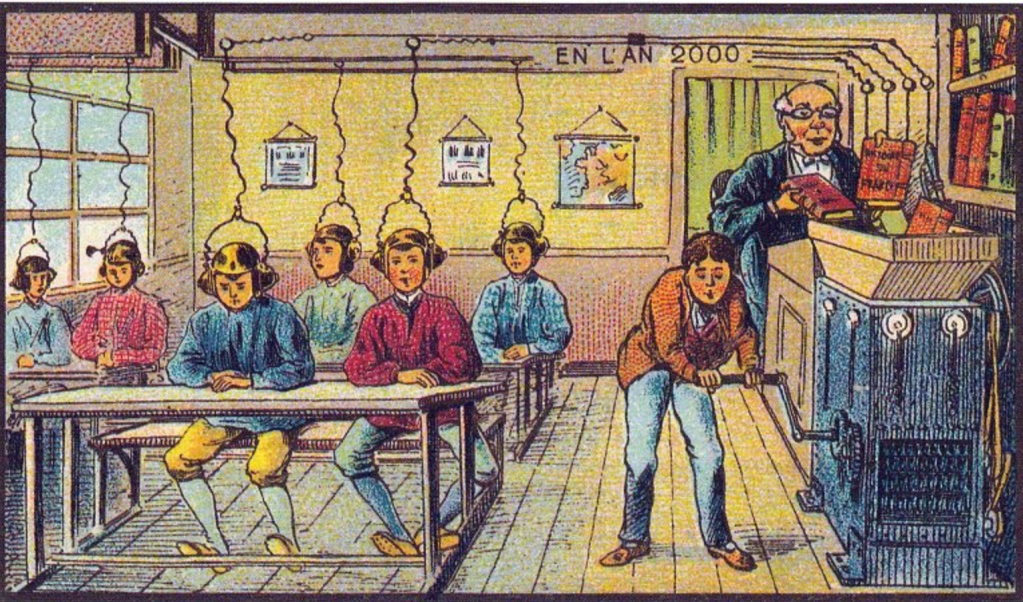
Just to be clear, though, my critique of contemporary colleges and universities is not rooted in the soil of a mythical past when “intellectual values” and a determined “search for the truth” were central to the academy’s operations, a time when the university wasn’t “politicized,” critiques which are common for many lamenting the “demise” of higher education today. When we were in college, they say, we debated contentious issues in class and our dorm rooms; we were always encouraged to speak our minds. Yet one should not ignore who “we” were. During the 1945-75 period, a time often labeled the university’s “golden age,” colleges and universities were nearly two-thirds male and overwhelmingly white: in 1965, men made up 62 percent of students; 94 percent of students were classified as (non-Hispanic) white. A total of 18 Black men entered Harvard in 1959, the largest number of Blacks ever admitted into a freshman class. If race and racism were debated, it was likely in the absence of Black students.
And, let’s not forget how, in that perfect age of vigorous intellectual debate, McCarthyism stood ready to devour many who challenged campus orthodoxies or that, shortly thereafter, Ronald Reagan promised to “clean up the university” if elected governor. Not exactly a thousand flowers blooming.
From a personal perspective, while I thoroughly enjoyed the heady discussions that marked my mid-1960s undergraduate days, I also remember who wasn’t at the table during those conversations, as well as how reluctant many of us were to buck campus orthodoxies. Undergraduate reluctance to challenge peers or professors is not solely a contemporary concern.
My growing awareness of this history has led me as a Jewish, leftist, academic to support diversity, equity, and inclusion efforts in higher education as a partial, but important means of confronting an academy that, for most of its history, has erected legal, economic, and cultural barriers to exclude Blacks and others who, at different times, have been categorized as “non-whites,” including Jews. And when, in the mid-1970s, the university’s doors finally opened a bit to allow for greater diversity, it wasn’t because administrators suddenly understood the strengths that these students would bring to their schools. In their fascinating study of admissions practices at 16 liberal arts colleges in Ohio and Massachusetts,Crafting a Class: College Admissions and Financial Aid, 1955-1994 (Princeton), Elizabeth Duffy and Idana Goldberg found that the decision to admit women and students of color in the 1970s was fundamentally the product of economic necessity, not an ethical awakening, and certainly not the expression of a desire for cultural change on campus.
Addressing this history of marginalization, then, is not (only) a matter of further opening the academy’s doors, particularly to those of limited economic resources. Rather, it has to do with challenging the structures within higher ed that continue to funnel advancement through exclusionary channels, and rethinking the culture of the academy so that it can better serve the interests of humanity – and not just in terms of preparing graduates for employment. In a fundamental sense, this is what diversity, equity, and inclusion (DEI) was designed to address: correcting past exclusions while fashioning a new, inclusive academic culture.
To be sure, DEI efforts, while far from central to university life, have not been flawless. Individual faculty members, in the name of DEI, have engaged in exercises that seem ill-conceived if not nonsensical (if one credits press accounts), damaging to their students’ ability to learn and engage with others. (Of course, DEI-related efforts are hardly the only examples of teaching approaches that don’t lend themselves to student learning.) DEI offices often operate in isolation from other administrative units. Further, while acknowledging the persistence and historical primacy of anti-Black racism, as a Jewish academic, I’m not alone in questioning how Jews and Jewish history fit – or most often do not fit – into a DEI framework, given that, as a people, we have been both oppressed and oppressor, successful and victimized because of that success.
This is the context, the understandings, that informed my thinking as I grappled with how to respond to the House Education and Workforce Committee’s December 5 interrogation of the presidents of Harvard, the University of Pennsylvania, and MIT. After reading through the transcript and the scores of articles which followed in their wake, I’m left struggling with how we acknowledge that antisemitism exists in higher education while realizing that, to put it crudely, the most outspoken committee members could give a rat’s ass about Jews when it doesn’t serve their political interests. I’m left questioning how we acknowledge that the three presidents should have been better prepared to sidestep the landmines which their inquisitors scattered in their path, while recognizing they would have been pilloried whatever their responses since their interrogators were determined to show that they condoned Jewish genocide on their campuses. I’m left questioning how we condemn plagiarism while understanding that people like billionaire investor Bill Ackman are interested in combatting plagiarism only insofar as it can be used to defenestrate their opponents. (Indeed, Ackman has already pledged to use his deep pockets to “to invest in an AI company to identify plagiarists in media and in higher education,” while the right-wing activist, Christopher Rufo, has pledged “an initial $10,000” to a “plagiarism hunting fund.”)

Reduced to the simplest question: How do we prevent these important issues from being framed and appropriated by the likes of Elise Stefanik, a political opportunist of the highest order, Ackman, or Rufo? If I had one piece of advice for the three university presidents, it would be: don’t bring a knife to a gun fight. Indeed, two of the three leaders already found out how that is likely to end. As academics who truly care about these issues, we must call out those who would manipulate the real pain of others to score political points. We should not be hamstrung when confronting the duplicitous behaviors of those whose real target is higher education itself. And we should not be shy about defending democracy on our campuses and in the nation.
Navigating the Upside-Down World of Republican Thought
While the ostensible purpose of the hearings was the manifestation of antisemitism on college campuses, particularly in the wake of Hamas’ October 7 attack on Israel, it quickly became evident that antisemitism was a doorway which, once opened, allowed an assault on the three presidents, diversity initiatives on college campuses, and higher education in general.
There is abundant evidence that antisemitism in the country has been rising, particularly since Trump’s election in 2016. The Anti-Defamation League reported that there were more antisemitic incidents in America in 2021 than at any time since the group started keeping track some 40 years ago. Antisemitism is real. But it is appalling to witness congressional Republicans leveraging Jewish pain to savage their political enemies, implying that college campuses are the root source of antisemitism and university leaders are responsible for its growth. It is infuriating to watch Republicans, unwilling to call out their own leader’s descent into the Hitlerian cesspit of blood purity rhetoric, parading about as the Jews’ best friends. Forgive me for observing that Elon Musk, Kanye West, Tucker Carlson, and Donald Trump carry more persuasive power to spread antisemitism than Sally Kornbluh (MIT) or Claudine Gay (Harvard), let alone unknown faculty members at different college campuses.
Chairwoman Virginia Foxx (R-North Carolina) began the December 5 “investigation” already assured of her conclusions. It was “clear” to her that “rabid anti-Semitism [and] the university are two ideas that cannot be cleaved from one another.” Since the “university” and “anti-Semitism” were inextricably allied, her next question was pure have-you-stopped-beating-your-wife? “What,” she asked, “is it about the way that you hire faculty and approve curriculum, that’s allowing your campuses to be infected by this intellectual and moral rot?” Foxx then called attention to a “prime example” of antisemitism at Harvard, DP 385, a course on “race and racism in the making of the United States as a global power.” The presidents must surely have wondered why their lawyers didn’t better prepare them for survival in an upside-down world.
Next up was Representative Jim Banks (R-Indiana), who vaulted past the trial portion of the hearings to arrive at the sentencing phase: “Once we prove” that those institutions are creating an unsafe environment for Jewish students, he promised, “that’s when we defund these universities by cracking down on not backing their student loans, taxing their endowments and forcing the administration to actually conduct civil rights investigations.” Sure enough, as the New York Times reported on January 6, House Republicans have embarked on an “aggressive and expansive investigation into institutions of higher education in America, targeting the academic elites they have long viewed as avatars of cultural decay — all in the name of combating antisemitism.”

Representative Joe Wilson (R-South Carolina) deepened the muddle by arguing that “there is no diversity and inclusion of intellectual thought” at universities, “and the result of that is antisemitism.” You remember Joe Wilson, don’t you? The congressman who shouted “You lie” when President Obama addressed a joint session of Congress in 2009; the one who voted to contest the 2020 presidential vote? In any case, Wilson found “proof” that there were no “conservative professors” at Harvard, Penn, or MIT because, as each of the presidents pointed out when asked, universities don’t track faculty ideologies. (This, ironically, is something that states like Ohio are demanding when they seek to pass laws requiring the ideological diversity of their faculties. Of course, this would mean that universities would be hiring faculty on the basis of ideology, precisely what Republicans have defined as the fatal flaw in DEI initiatives.) Remarking that “illiberalism” has “taken over the country,” Wilson concluded, “With that in mind, the barbaric mass murder on October 7th by Iran puppets Hamas, invading Israel, trained by war criminal Putin, has shockingly revealed that many college campuses are sickeningly antisemitic.”
The Attack on Higher Ed
For those like Harvard’s Laurence Tribe who have piled onto the presidents for their “hesitant, formulaic, and bizarrely evasive answers,” I could only ask: how does one respond to such confusion without sounding like, well, professors berating their students for having spent the night playing beer pong instead of doing the readings? How do we confront an environment in which those in a powerful position to shape the country’s future insist on a view of the world in which Putin trains Hamas’ fighters and universities are by definition antisemitic, a view of the world in which Trump won the 2020 election and the January 6 insurrection was “a normal tourist visit”?
That Republicans saw campus conflicts over the Hamas attack on Israel and the Israeli response as a vector for their own assault on higher education by now should be clear to all. How, after all, could one object to Congresswoman Foxx’s recent statement that “We want students to feel safe on their campuses, that’s our No. 1 issue, and Jewish students have not felt safe”? Yet the fact that Foxx has never brought Black, Muslim, or Arab students under the shelter of her concerns is evidence of Republican duplicity. Anti-Muslim and anti-Arab hate have ratcheted up since the October 7 Hamas attack, and anti-Black racism has an even more painful history in the academy. A recent U.S. Department of Education report found, 55% of on-campus hate crimes in 2020, the last year for which we have statistics, were motivated by race.* A September 2023 study of Black students at nine public four-year universities and three private universities in Ohio found that 19% of the students felt that they didn’t belong; 17% experienced a negative interaction with campus police, and nearly half said that their racial identity led to added stress. Governor DeSantis — five days out from the Iowa caucuses — offered in-state tuition for Jewish students who, fearing for their safety, may want to flee to Florida’s public colleges. Yet he has never made the same terms available to Black students who were forced to deal with nooses found hanging from trees at Stanford, Sonoma State, Duke, and the University of San Francisco, among others.
The chance to take down Claudine Gay on charges of plagiarism – “TWO DOWN,” Stefanik crowed – offered Republicans the opportunity to press home their case that diversity initiatives (always) sacrifice excellence on the altar of race. Or to translate this into political terms: people of color in high positions likely got there because of DEI initiatives or affirmative action. The latter now history, Republicans are doing everything possible to do the same with DEI initiatives. Back to the good old days.
John Warner, in his excellent blog for Inside Higher Ed, recently remarked that “The attacks against higher ed and educators, coming from various corners…are rooted in a combination of good-faith concern, bad-faith opportunism and broader misunderstanding.” I agree, and also share the “palpable sense of demoralization” of many in higher ed. But I’m not content to “expect only further degradation of our work.” If we are to be fully prepared for this fight, we need to be clear what is at stake when MAGA congresspeople and billionaire investors manipulate Jewish fears to challenge Black inclusion, defend academic standards solely as a means of humiliating vulnerable targets, and threaten financial consequences for any who don’t adopt their political orthodoxy. If we are to bring more than knives to this gun fight, we need to demand and support an academy that serves all its students, that is bold in its critique and responsible in its methods, that is humble in its assumptions and that never loses sight of its aim to work for the interests of all humanity. “Democracy has to be born anew every generation,” John Dewey wrote, “and education is its midwife.”

*An FBI report released on January 29, 2024, noted a 90% increase in hate crimes in K-12 schools and colleges from 2018 to 2022. Black Americans were the most frequent victims, with a total of 1,690 hate crime offenses against them reported over the five-year period, followed by L.G.B.T.Q. people with 900 offenses; Jewish Americans were third, with 745 reported offenses. The statistics count crimes against students or others inside school buildings and on campuses. [Added January 30, 2024]
Images:
France in the Year 2000, Jean Marc Cote (1901) – Wikimedia commons
Edwin S. Porter, The Great Train Robbery (1903) with Justus D. Barnes
Joe Wilson from Informed Comment, juancole.com
Michael Hundt, Ein new Kůnstliches Fechtbuch im Rappier (1611)
 After Class
Sure, the Republicans are hypocritical and opportunistic, but academia gave them a pretty good opening by failing adequately to think through the interface between free speech and protecting the feelings of designated groups. What happened October 7th and what has happened since then in Gaza are both catastrophic events to the Israelis and to the Gazans, but colleges are at risk by protecting the feelings of some groups but not all. You either need to allow free speech that is not legally actionable in all circumstances or you need to prohibit it across the board (subject to 1st amendment requirements on public campuses). Consistency might have permitted the university presidents to say something more decisive and keep their jobs. Of course, the attack on academia due to leftwing tendencies will go on regardless.
LikeLike