Black Lives Matter and the Start of Classes

Steve Volk, August 16, 2015
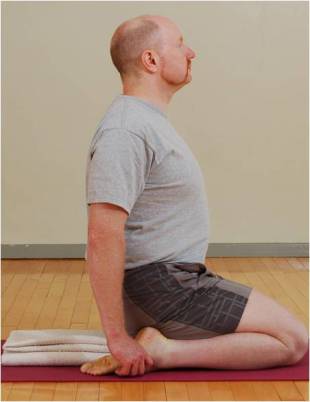
VirasanaAt the beginning of yoga practice, we often sit for some time in virasana. With eyes closed, we begin to clear our minds – although mine usually just keeps trucking along. As we sit, we are often encouraged to think about the space in front of us, on our sides, and behind us. At my practice today, I began to think more about what occupies those spaces.

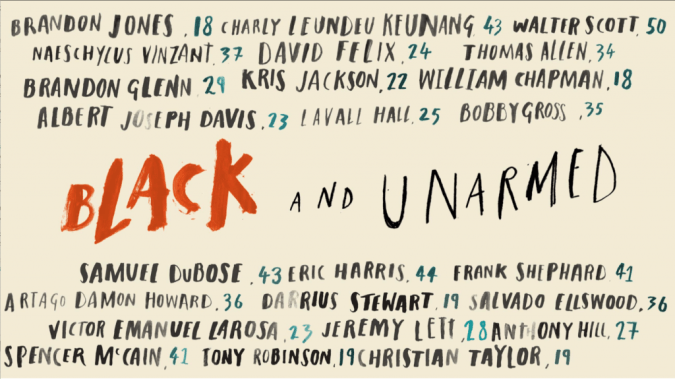
The semester will begin soon, just a few slim weeks since the anniversary of Michael Brown’s killing in Ferguson. What is more, we’re coming off a summer which, for many of us and our students, was an appalling, angering, and disheartening period, filled as it was with so many Black bodies cut down by racist violence. As we tried to cope with Charleston, our thoughts were quickly forced to ask why Sandra Bland was pulled over for not signaling a lane change…and ended up dead a few days later; why Samuel DuBose was pulled over for not having a front tag…and was promptly killed by a white University of Cincinnati officer; why Christian Taylor was gunned down by a white police trainee in Arlington, TX. The Washington Post recently reported that 24 unarmed black men have been killed by the police so far this year, that’s 40% of all the unarmed deaths. And that’s likely an under count. Sam Sinyangwe of the Mapping Police Violence project reported that 179 African Americans have been killed by the police so far this year.

Peter-Strain-Ferguson

Peter Strain for the Washington Post

“Why do US police keep killing unarmed black men?” the BBC asked back in May as our students were leaving campus. Perhaps that question only remains alive for foreign journalists still trying to figure out why racial carnage in the United States is so endemic. Sinyangwe writes, “In the aftermath of Ferguson…there was this big question ‘Is this a pattern, is this an isolated incident?’ What [my data] shows is that Ferguson is everywhere. All over the country you’re seeing black people being killed by police.” He notes that “Black people are three times more likely to be killed by police in the United States than white people. More unarmed black people were killed by police than unarmed white people last year. And that’s taking into account the fact that black people are only 14% of the population here.” Perhaps, as I have come to realize, what was appalling about this past summer was not that it was unusual but rather that it was all too common. What has changed is that we’re hearing about this racial violence since body cameras and social media have become our nation’s paper boys, ready to drop this news on our doorsteps every hour.

This is not the time or the place to answer the BBC’s question, but it is a time to recognize that for many of our students, faculty, staff, and community members, the maddening crimes of this not-yet-concluded summer occupy all the spaces around them. These events, and what they imply for their own lives and the society we live in, are never far from their thoughts.

This may not be true for all of us, but whatever space Ferguson and Baltimore and Prairie View and Cleveland does occupy in your mind, as we prepare for classes and the return of our students, we would do well to recognize that for many in our community, our students above all, an education that doesn’t provide the tools to think critically about the BBC’s question as well as the set of skills needed to change the reality that calls forth such a question in the first place, is not an education.

What does this mean for how we teach our classes or engage our students? Beyond a doubt, it will mean different things for different people, and that’s as it should be, for there is no one way to approach this. But I have found a few important articles that give some good advice, and surely more are out there. I would recommend Dan Berrett’s recent piece in the Chronicle of Higher Education, “A Year of Racial Tumult Brings Potent Lessons – and Risks – to the Classroom,” as well as Colleen Murphy’s article, also in the Chronicle, “How a St. Louis HBCU, Deeply Touched by Ferguson, Handled a Difficult Year.” Do check out a Penn State website, “The Fire This Time: Understanding Ferguson. Learning from Faculty, Students, and Community Members, from Penn State and Beyond as they Engage the Events in Ferguson, MO.” For those on Twitter, I’d strongly recommend the #FergusonSyllabus and the follow-up #CharlestonSyllabus that was put together by Chad Williams at Brandeis. See, as well, the #Charlestonyyllabus produced by the African American Intellectual History Society. You can also find a list of New York Times articles on Charleston and its aftermath here.

However we think about this past summer, and year, we need to be aware of the fact that many in our community are hurting and we need to begin this year with a recognition of the pain that they suffer. We should understand that even if these events don’t take up all the space around us, and even if these are subjects what we don’t directly teach, they are events that have deeply impacted many in our community.

Here’s another timely resource. If you’ve ever hiked in the UK, you’ve likely encountered stinging nettle, and not in a friendly way. A slight brush against the plant produces a burning sting that goes on and on. As luck (or some other intention) would have it, the crushed stem of the jewelweed which grows right next to the stinging nettle, can be used to sooth your irritated skin. If the events of this summer were like a stinging nettle, than the publication of Ta-Nehisi Coates’ Between the World and Me (NY: Spiegel & Grau), a short memoir-polemic, is the nearby jewelweed. Coates’ is a massively important voice, his insights stunning, disturbing, unforgettable. This is a book that must be read. A few faculty, led by Pam Brooks, have been planning some discussion groups to explore Between the World and Me, and the A&S dean’s office has agreed to provide interested faculty with copies. We’ll get out more information on this soon.
black-unarmed-201415-1024x575

Peter Strain, “Black and Unarmed,” for the Washington Post

The Dual Life of a Syllabus

by Steve Volk, August 4, 2015

Shark-Syllabus

Shark Syllabus – Jack Dowell – CC/Flickr

If you’re ahead of the game, your syllabi for the fall semester are finalized and ready to go. If you’re like me, they are hardly ready for prime time and you’re probably feeling like the guy in the photo. In either case, particularly if you’re new to syllabus writing, here are a few things to think about as you prepare, revise, or tweak your syllabi.

The syllabus is a strange animal: it is conceivably the most important (and complicated) teaching document you will prepare each semester and yet, after you hand it out, most students use it for one thing only: to find out the readings assignments or when papers are due or exams scheduled.

The root of the problem is that the syllabus is really two different documents serving two different purposes. On the one hand, it is the most comprehensive guide that you will prepare detailing how you plan to organize a body of information in such a way as to reach your educational goals while having the greatest impact on student learning. On the other, it is seen as a quasi-legal contract that sets out your responsibilities to the students and what they must do in order to successfully complete the course. The first purpose is most often invisible and implicit; the second needs to be explicit and unambiguous. Continue reading

Endings and Beginnings: Thoughts on Finishing the Semester

Steven Volk, May 3, 2015

Geometry-of-Conscience

Hundreds of silhouettes gradually light up over 90 seconds. Alfredo Jaar, “Geometry of Conscience,” Museum of Historical Memory and Human Rights, Santiago, Chile. Image at: http://www.designboom.com/architecture/the-geometry-of-conscience-memorial-by-alfredo-jaar/

A few weeks ago, the Chilean-born, New York-based artist, architect and filmmaker, Alfredo Jaar, was on campus to give a lecture which he titled, “It Is Difficult.” The title comes from William Carlos Williams: “It is difficult/ to get the news from poems/ yet men die miserably every day/ for lack/of what is found there” [Asphodel, That Greeny Flower and Other Love Poems: That Greeny Flower].


Jaar has often taken on the difficult task of turning news into poetry, and his own poetry into news. He is well known for memorializing victims of the “dirty wars” in Chile and Argentina. He designed a deeply moving installation at Chile’s Museum of Historical Memory and Human Rights called “Geometry of Conscience.” His contribution to the Parque de la Paz (Peace Park) in Buenos Aires, “Punto Ciego (Blind Spot),” commemorating the thousands of victims of the Argentine military juntas, is a landmark work among those who labor to construct an architecture of memory that goes beyond history and into conscience. Continue reading

The CEMUS Project – Lessons for Oberlin?

Steven Volk, April 26, 2015

A colleague recently introduced me to CEMUS, the Center for Environment and Development Studies at Uppsala University in Sweden. CEMUS is a unique student-initiated and primarily student-run university center with the explicit ambition to contribute to a better world. Since the early 1990’s, it has offered interdisciplinary higher education and been a creative meeting place for students, researchers and teachers from Uppsala University and the Swedish University of Agricultural Sciences. The three main principles that define it are Student-Led Education, Collaboration & Partnership and Transdisciplinary Research. Interestingly, at least for us at Oberlin, its founding was at least partially inspired by a lecture given by our own David Orr in Sweden some years earlier in which he set out “six myths about the foundations of modern education, and six new principles to replace them.” Continue reading

Teaching and Supporting Students with an Autism Spectrum Disorder (ASD)

Steven Volk, April 19, 2015

Our colleagues in the Office of Disability Services recently sponsored a “Light it up Blue” event as part of a worldwide effort to raise awareness of autism. Mudd Library, like the Eiffel Tower, the Empire State Building, the Pyramids, and other sites around the world, was bathed in blue on April 2, part of a month long Autism Awareness (also called Autism Acceptance) project.

As our colleagues noted, Oberlin is one of many colleges and universities where the number of students on the autism spectrum has been growing. I’ve attended a number of sessions sponsored by the Office of Disability Services as well as by Elizabeth Hamilton’s Faculty-Staff Learning Community, and they have been remarkably useful in providing attendees with a clear sense of how best to create a classroom in which all our students, including those on the spectrum, can learn. Continue reading

Teaching Students How to Use Images Responsibly

Steven Volk, April 12, 2015

Luis_Korda_02-Fidel-Cienfuegos

Luis Korda, photographer: “Fidel Castro and Camilo Cienfuegos in Havana,” January 8, 1959.


Like most of us, I use a lot (A LOT) of images in my teaching. Many of the images I show are for what I would call “background purposes.” Nothing like a photo of Fidel Castro and Camilo Cienfuegos riding into Havana on January 8, 1959 to give students a sense of what the Cuban Revolution felt like at its moment of inception. Continue reading

Educating the Whole Student: Personal Dispositions and Student Success

Steven Volk, April 5, 2015

In late January, nearly 90 faculty and staff gathered to begin a discussion about curricular priorities and whether we could be more articulate and intentional in guiding our students toward the learning objectives we feel are essential for their education. In one of the activities of that mid-winter workshop we asked participants to reflect on what things were critical for “success” at Oberlin. We designed the exercise to be an open one, neither defining “success” nor indicating whether the “success” we referenced was theirs (i.e., what did faculty or staff need to do to encourage student success) or their students (what are the factors that determined student success, or, in their absence, prevented it). Participants jotted down their ideas, shared them with others at their tables, and finally transferred them to sticky notes which were placed on large sheets located around the meeting room.

pabloneruda_poetofthepeople4

Monica Brown, Pablo Neruda, Poet of the People

We collected them after the meeting and quickly discovered that almost uniformly, participants commented on those factors which they felt defined student success, not their own. So we began to map the comments to common learning outcomes: knowledge and intellectual skills, broad and integrative knowledge, engaging diverse perspectives, creating civic capacity, applied and collaborative engagement, creativity, and personal growth and reflection. Not surprisingly, many participants saw as indicators of success the students’ ability to recognize competing epistemologies, ask really hard questions, revise work, navigate their way through new materials, understand from multiple perspectives, transfer and apply skills, focus on process, make connections and synthesize. Continue reading

Active Reading Documents: Scaffolding Students’ Reading Skills

Steven Volk, March 29, 2015

Reading-Corso

Reading (Castel Sant’Angelo, Rome; Stefano Corso), CC

The “Article of the Week” has considered issues of reading a number of times [e.g., here and here], most often dealing with how much should we be assigning in our classes as well as the technologies of reading. The articles also addressed problems of novice vs. expert reading in disciplinary fields. This last issue has been quite noticeable in my own field, history. The goal of history reading in high school – most often assigned from textbooks – is usually intended to encourage memorization. As such, it is considerably different than the skills we are looking to strengthen at the college level. So, I’m always on the lookout for appropriate ways to scaffold reading assignments to help students read both for comprehension and analysis.

I recently found one such method discussed in the current issue of College Teaching [63:1 (January-March 2015:27-33]. In “Active Reading Documents (ARDs): A Tool to Facilitate Meaningful Learning Through Reading,” Justin M. Dubas and Santiago A. Toledo, respectively an economist and a chemist, present a practical tool that promises to develop student understanding of assigned material incrementally through reading. I’ll summarize their findings in this “Article of the Week” and encourage those of you with access to the journal to read it in its entirety. Continue reading

Putting the “O” Back in MOOC: Collaborating to Solve Problems

Steven Volk, March 15, 2015

This past Thursday, I had the opportunity to hear Michael Horn, the co-founder and Executive Director of Education at the Clayton Christensen Institute for Disruptive Innovation who was speaking at Oberlin on “Disruptive Innovation and Higher Education.” The following day, I was privileged to moderate a discussion between Horn and Bryan Alexander. Alexander was, for many years, a senior fellow at the National Institute for Technology in Liberal Education (NITLE) and a leading advocate for education-driven, liberal-arts focused technology. He describes himself as a “futurist, researcher, writer, speaker, consultant, and teacher, working in the field of how technology transforms education.”

hermanandrosie

Gus Gordon, Herman and Rosie (Roaring Book Press, 2013)

Finally, I hosted Alexander at a CTIE workshop where we enjoyed a wide-ranging conversation on how technology, particularly the ubiquitous use of digital platforms and media might be impacting how our students learn, what that means for teaching strategies, and whether the structure of emerging labor markets (including the fact that our students will be occupying a multitude of jobs in the future suggests that we need to be preparing them in different ways than we have in the past. (Our students are entering what many call the “gig economy”. The “gig economy” is about many, temporary, part-time jobs. It implies not only that we have moved past what I would call long-term employment monogamy, where people hold one or two jobs for their whole lives, but that we have also moved past serial employment monogamy, where individuals spend 1-2 years at a job and then move to another. Instead, it seems, we have moved to employment bigamy (my terms, blame me), where people will find multiple part-time and temporary jobs out of which they will attempt to put together a living wage – think Uber or Alfred). Continue reading

The Empathy Gap (and can we address it?)

Steven Volk, March 8, 2015

Some years ago (April 25, 2011) I wrote an “Article of the Week” on empathy in response to the research findings of Sara H. Konrath, Edward H. O’Brien, and Courtney Hsing suggesting that college students are becoming less empathic, and significantly so. [“Changes in Dispositional Empathy in American College Students Over Time: A Meta-Analysis,” in Personality and Social Psychology Review 15.2 (2011): 180-198] In a meta-analysis of 72 samples of American college students, the researchers studied four aspects of “interpersonal sensitivity” including empathic concern (EC), or sympathy, over the misfortunes of others and perspective taking (PT), the capacity to imagine other people’s points of view. (The other two aspects were the tendency to identify imaginatively with fictional characters in books or movies and personal distress, the anguish one feels during others’ misfortunes.) The study found that EC scores declined by 48% when comparing students from the late 1970s/early 1980s and those in 2009; PT scores went down by 34%. For both, the sharpest decline came after 2000. Continue reading