Student Evaluations of Teaching: Once More into the Debate

Steven Volk (September 21, 2014)

A slight detour this week from the daily business of the semester to a look towards its end. This Article of the Week was spurred by an article which appeared in the Chronicle of Higher Education this past week. In “Scholars Take Aim at Student Evaluations’ ‘Air of Objectivity,’” Dan Berrett reports that a new examination of end-of-semester student evaluations has found that they “are often misused statistically and shed little light on the quality of teaching.” Other than that, they’re probably OK. (That’s just me being snarky, so disregard.) More seriously, the draft study by Philip B. Stark, a professor of statistics at UC Berkeley, and Richard Freishtat, senior consultant at Berkeley’s Center for Teaching and Learning, repeats some of the critiques that have been leveled against Student Evaluations of Teaching (SETs) for a long time and raises some new ones.

I can’t comment on the research design or reliability of these studies, and there are certainly arguments in favor of SETs, but the following data has been reported over the years: Continue reading

Using Small-Group Discussions Effectively

Steven Volk, September 14, 2014

Compared to our colleagues at most universities, our classes are blissfully small. Computer Science 61A enrolls nearly 1,100 students at Berkeley; Economics 10 topped out at more than 800 at Harvard. Still, many of the classes we teach are beyond the comfortable-discussion size of 10-15 students regardless of what our faculty-student ratio may indicate. That doesn’t mean we should abandon small-group discussions as a pedagogic strategy, but it does require some planning, especially in the critical step of socializing the information gained in smaller groups among the whole class. How can we use small discussion sections most effectively in classes that enroll 30, 50, or more students?

Large-Class

Why Discuss?

This post is more of a “how to” than a “why to,” but it’s still important to touch on the importance of discussion in student learning. A constructivist notion of learning, simply put, holds that understanding is gained by experience and reflection. When we encounter something new, we have to reconcile it with previously held ideas or experiences, figuring out how to make sense of the new knowledge. In that process we become the active creators of our own knowledge rather than sponges just absorbing what others tell us. While our students can (usually) reproduce what we tell them, learning is not the process of hearing-remembering-repeating, even though repeating and remembering may well be a part of ultimate learning. To learn means to ask questions, challenge ideas, explore unfamiliar territory, come to clarity in our own terms. As Ruth Tringham, a Berkeley anthropology professor put it, traditional teaching models are like banking, “where you pour knowledge into a student and hope to get some interest back,” whereas what we really want is for students to come “to grips with the questions themselves and learn to evaluate information.” Continue reading

Mindsets: “I’m not really good at that…”

By Steven Volk (September 7, 2014)

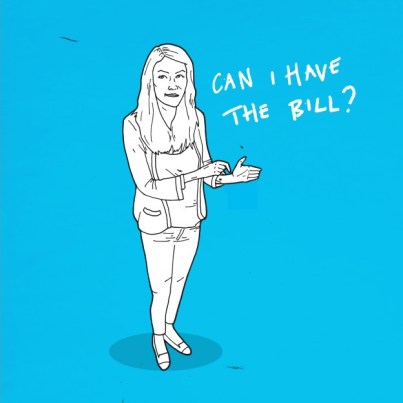
My mother (who taught Spanish and French), my sister (quite competent in French), and I (Spanish) used to tease my father mercilessly about his inability to speak a language other than English. We drove around Mexico when I was young and laughed with great zest when, after each meal, he would try to ask, in Spanish, for the check (“La cuenta, por favor”). What emerged from his mouth were strange sounds that had quite literally become lost in the translation. The server would look at him in puzzlement until one of us stepped in to the rescue.
Can-I-Have-the-Bill-624x624

For my own part, I still remember the “D” I got on my drawing of an American eagle in the 4th grade from Mrs. Simmons, who (I thought) was a lovely teacher and was just pointing out a reality: I couldn’t draw, never could, still can’t. My father’s problem was that he just couldn’t learn another language. (He often told the story of how, when he was a student at the University of Wisconsin – he became a lawyer; no slouch, he – his Latin teacher gave him a “C” instead of failing him if he promised never to take a foreign language again.)

So, where are these familial stories going? To the mindset research of Carol Dweck, a psychology professor at Stanford, which is the subject of today’s “Article of the Week.” Those in psychology or neuroscience will surely know her work. To boil it down drastically: through decades of research, Dweck (and her co-investigators) came to the conclusion that most people have two very different understandings about intellectual abilities and where they come from. Some think that people are just naturally talented in certain areas (foreign languages, art, math, music, etc.), and if you weren’t born with those abilities, there’s not much you can do to change that. Others think that intellectual abilities can be cultivated and developed if you apply yourself to the challenges at hand. It’s not that people don’t differ in their current skill levels, nor that with hard work everyone can be a Serena Williams, a Yo Yo Ma, or an Albert Einstein, but this second group believes that they can improve their underlying abilities if they work at it. (Interestingly, Einstein once wrote, “It’s not that I’m so smart, it’s that I stay with problems longer.”) Dweck called these approaches “mindsets,” and labeled the former a “Fixed Mindset,” and the latter a “Growth Mindset.” Continue reading

Critical Thinking in the Classroom: Some Questions for the Summer

Steven Volk (May 4, 2014)

If you did a search for the “learning goals” of liberal arts colleges, you probably wouldn’t  find a single one that didn’t emphasize “critical thinking.” In fact, critical thinking as a desired educational outcome only makes headlines when some group decides that it’s not what schools should be teaching, which brings us to the 2012 platform of the Texas Republican Party:

We oppose the teaching of Higher Order Thinking Skills (HOTS) (values clarification), critical thinking skills and similar programs that are simply a relabeling of Outcome-Based Education (OBE) (mastery learning) which focus on behavior modification and have the purpose of challenging the student’s fixed beliefs and undermining parental authority” (p. 12).

Ah, yes. Education should not challenge fixed beliefs or parental authority! Still, I’m not interested in pursuing that line of thought at the moment (as tempting as that might be), but rather want to consider what we mean when we talk about “critical thinking.” And, while I’m at it, I’d like to raise some questions for us to think about over the summer months which are visible right on the horizon: Are we doing what we should to foster critical thinking skills in the classroom? What more could we be doing? What kind of support do we need to create classroom pedagogies that foreground critical thinking? What challenges are we likely to face? Continue reading

Closing Time: Managing the End of the Semester

Steven Volk (April 28, 2014)

“Every new beginning comes from some other beginning’s end, yeah,” Semisonic

The end of the semester, like the first week, poses specific challenges to teachers. For most of us, it feels like we’re in a head-long rush to complete the syllabus, hand out evaluations [Check back to the “Article of the Week” from December 8, 2010 for tips on how to read your Student Evaluations], and prepare students for final exams or papers, all the while trying to achieve closure on the semester. It’s also a time when both student and faculty energy levels have bottomed out, even more so in the spring semester. It probably goes without saying that the best way to end the semester is the way that works for you. But here are some suggestions that have come up over the years from my own practice and some that I’ve taken from other teaching and learning centers. Continue reading

The Last Five Minutes: Class Endings and Student Learning

Steven Volk, April 20, 2014

A recent article by David Gooblar in the Chronicle of Higher Education’s on-line “Pedagogy Unbound” section reminded me how important it is to end a class well, both individual classes (today’s topic), and the semester as a whole (which I’ll turn to soon). We spend a fair amount of time thinking about how we start a class: perhaps summarizing material from the past class, highlighting written responses to the readings that students have posted, offering a snapshot of what the day’s class will cover. But the ending is often less planned, particularly as we rush to get through the topics we had intended to cover that day.

Why is that? Probably a lot of factors are to blame, but the most common one I’ve encountered is that faculty try to put too much into the 50 or 75 minutes we have in a regular class session; we try to cover too much. Many, myself included, particularly when I was a bit newer to the game, are worried that we will run out of things to say before the clock signals the end of the class. As a result, we over-prepare … just to be sure. Of course, we never actually run out of things to say. Rather, we run out of time in which to say them. Now, when we look up at the clock, we find that there are five minutes left and we have 15 minutes worth of “stuff” still to deliver. What to do? Continue reading

Only Connect? What is the Future of Higher Education

Steven Volk, March 3, 2014

Last November, our Oberlin colleague, David Orr, delivered the Presidential Lecture entitled: “Only Connect: A 4th Gyre.” (If you missed it, you can catch up with it on YouTube).  David borrowed E.M. Forster’s phrase, “only connect” to underline what is needed to “turn vicious cycles into virtuous cycles that eventually transform our politics, economy, cities, buildings, infrastructure, landscapes, transportation, agriculture, technologies, and our manner of thinking.”

Forster’s injunction, from Howards End, spoke to the importance of bringing all the parts of one’s life together: “Only connect the prose and the passion, and both will be exalted, and human love will be seen at its height. Live in fragments no longer.”

onlyconnect

EM Forster, Howards End

This charge, to “only connect,” ricocheted around my brain as I read a new study produced by the Gallup organization for the Lumina Foundation.  “What America Needs to Know About Higher Education Redesign,” argues that “the importance of post-secondary education in preparing and connecting people with a good job” should be at the center of a redesign of higher education. By stressing that single purpose, the study stands Forster on his head, arguing in favor of a life in fragments, one in which students are disconnected from community and purpose, to say nothing of passion and prose. Continue reading

Beginning…again. Start of the Semester “Expectations Reflection Paper”

Steven Volk, January 31, 2014

One of the things that I most enjoy about a life in the academy is the bi-annual prospect it provides to start anew. Whether we follow through on them or not, the resolutions we make at the start of each new semester offer an opportunity to reflect on what went well and what went pear-shaped in the last semester, as well as a chance to institute some changes to address the shortcomings.

There’s a boat-load of hopefulness built into this bi-annual reset button, and I was reminded of the importance of this once again when reading the obituary of Pete Seeger, a personal hero who visited Oberlin many times during his long career. “The key to the future of the world,” he said in 1994, “is finding the optimistic stories and letting them be known.” Continue reading

How to Solve It

Steven Volk, December 9, 2013

An article I was recently reading (“Teaching Learning Processes – to Students and Teachers,” by Pamela Barnett and Linda Hodges) reminded me of a 1957 book on mathematics by George Pólya, How to Solve It (2nd ed., Princeton: click on link for a partial pdf of the volume). The issue is a central one for all teachers: Rather than solving problems for our students, we provide them with strategies for problem solving. Or, as Pólya put it, we are always “trying to understand not only the solution of this or that problem but also the motives and procedures of the solution, and trying to explain these motives and procedures to others…” (vi).  Pólya is quite clear that while his book “pays special attention to the requirements of students and teachers of mathematics, it should interest anybody concerned with the ways and means of invention and discovery” (vi). “Invention and discovery” – what better to words to describe what we want to inspire and develop in our students?

George Pólya’s Approach

Pólya’s approach has four parts, which I’ll copy here from his text before suggesting some changes I have made when approaching problem solving in history, and which others can similarly adapt to their specific discipline. Continue reading

Learning from the Semester

Steven Volk, November 25, 2013

As the semester races (or crawls) to a close, it’s a good time to think about capturing what you (as opposed to your students) learned from the semester.  Here are three different ways to track your teaching, each slightly more intensive. For the Shostakovich fans out there, I’ve labeled each so you can plan your time accordingly.

Gadfly-Suite

(1) End of Semester Reflections: Short, think of it as the Gadfly Suite, Op. 97a

While you can reflect on your teaching at any point of the semester (see nos. 2 and 3 below), there are two times that I have found to be particularly productive: Some 2-3 weeks before the semester ends (when you already have a very good sense about how the semester has gone), and about 2-3 weeks after the semester ends (once you have had a chance to read the student evaluations). Granted that everyone is unbelievably busy right now, try to set aside 30 minutes to begin to answer these questions (and return to them when you can). It is useful to engage in this process before you get student evaluations of your teaching. You want to think from your own perspective as to why the semester worked out as it did. Continue reading