Size (Still) Matters: The Technologies of Reading and tl;dr

Steven Volk, March 1, 2015

Some years ago for another “Article of the Week” (Sept. 24, 2012, to be exact), I wrote about the challenge we face deciding how much reading to assign. I thought about it again in light of an eye-opening article by Naomi S. Baron in the Chronicle of Higher Education (February 13, 2015). It was mysteriously titled, “The Plague of tl;dr.”  Obviously, I had to read it since I had no idea what it was about. [If you don’t subscribe to the Chronicle, the link might not work and you’ll need to go through the library’s website or that of your own institution.] Guesses? According the Urban Dictionary, “tl;dr” means “too long; didn’t read.” It’s used in snarky riposte to someone who, according to the grumbler, has gone on too long in a blog post. As in: “tl;dr…why dont you give up on your unabridged edition of War and Peace or at least stop posting it here?” Zing.

Page-turning-Lucas-absent-pour-le-moment-mais-reviens-bientôt

“Reading,” Lucas absent pour le moment mais reviens bientôt (CC)

When I posted my own (way tl;dr) article in 2012, it was in response to the hand-wringing that accompanied the publication of Richard Arum and Josipa Roksa’s Academically Adrift: Limited Learning on College Campuses (Chicago: University of Chicago Press, 2011). The authors argued, briefly, that student aren’t learning what they should in college and much of this is due to the fact that they aren’t writing enough, thinking enough, or reading enough. As an example, the authors found that 32% of students do not take any course in a semester with more than 40 pages of assigned reading per week. Academically Adrift does raise a lot of concerns, but one question I still have is what, exactly, to make of their evidence. Should we be happy that nearly 70% of the students are taking courses with more reading? Are the 32% of the “light-reading” courses in the sciences, math, poetry, creative writing, studio art, etc? And finally, for the purpose of this discussion, do we have any research to suggest that more is better? Continue reading

Can We Remove the Risk from Adopting New Teaching Approaches?

Steven Volk, February 15, 2015

Last week I wrote about preparing students for active learning. This week I wanted to present one recommendation for helping interested faculty prepare more active learning teaching designs for their classrooms. I should start by saying that faculty assuredly don’t need advice from me on how to construct remarkable, active learning environments since this kind of approach happens in classrooms around the campus on a daily basis. I plan to showcase some examples as “Articles of the Week” entries very soon. Rather, my worry is that some faculty will hesitate to adopt such approaches out of concern for how they might be received by students.

Jump

Roger, Risk Management James Hotel Lobby Picture NYC NY (CC)

And that’s not an idle concern. The literature seems to suggest that faculty might be evaluated more negatively in active learning contexts than in more traditional lecture courses. The Center for Teaching Excellence at Cornell cautions, in a rather understated fashion, that “Some students may not accept new learning activities with complete ease.” A 2011 study by Amy E. Covill [“College Students’ Perceptions of the Traditional Lecture Method,” College Student Journal 45:1 (March 2011)] goes further, finding that “many students may resist, and even be hostile toward, teachers’ attempts to use active learning methods.” Eric Mazur, the Harvard physics professor who has become something of a celebrity in the field of peer instruction and active learning, commented that his approach draws “a lot of student resistance.” He adds, “You should see some of the vitriolic e-mails I get. The generic complaint is that they have to do all the learning themselves. Rather than lecturing, I’m making them prepare themselves for class—and in class, rather than telling them things, I’m asking them questions. They’d much rather sit there and listen and take notes.” Continue reading

Preparing the Environment for Active Learning

Steven Volk, February 8, 2015

David Gooblar had a good column on “Why Students Resist Active Learning” in a recent “Pedagogy Unbound” column in the Chronicle of Higher Education. That led me to all sorts of similar posts such as “Hang in There! Dealing with Student Resistance to Learning-Centered Teaching” by Rick Reis at Stanford, or “’What if Students Revolt?’ – Considering Student Resistance: Origins, Options, and Opportunities for Investigation,” by Shannon Seidel and Kimberly Tanner for CBE Life Sciences Education. When the articles began to sound more like counterinsurgency techniques than pedagogy, I stopped looking. But why look elsewhere when we have lots of examples in our own classrooms. Probably from this past week.

Here are a few things to think about when considering active learning techniques that have worked for many of us. There are a number of reasons why faculty are wary of active learning approaches, and I’ll address one of them, and propose a solution, in next week’s “Article of the Week.” But for now, we’ll stick with the students. Continue reading

Preparing Your Class: Listening to Understand

Steven Volk, February 1, 2015

Unless you have spent the past few months living in a cave on an island off Maine (as, indeed, one of my students did some years ago as a winter term project), you will know that we in academia, and particularly those of us who teach at selective liberal arts institutions, are in a challenging moment regarding how we talk about difficult issues in the classroom and in the broader college community. At issue is the question of “civility.” The quotes are not ironic but rather indicate that whether there ever was a consensus on what that meant, it no longer operates. Nicholas Dirks, the Chancellor of the University of California, Berkeley, addressed the topic in an email to students and faculty on the occasion of the 50th anniversary of the free speech movement. And got a lot of pushback. Continue reading

Designing Assignments for the New Semester

Steven Volk, January 25, 2015

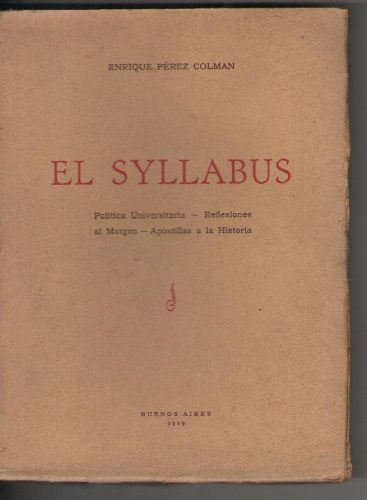
El_Syllabus_2014-05-20_19-25

(Creative Commons; Amorparamipatria)

As we prepare to return to classes (speaking to my own institution), I’ve been putting some final thoughts into my syllabi, and particularly to the design of my assignments. I will admit that more than once over the years, I have “place-held” my assignments on the syllabus with a vague notation (e.g. “Midterm essay due on March 13”) and left the actual work of figuring out what it would consist of until, well, pretty late in the game.

For those who follow the good advice of backward design, assignments are a critical early step for overall course design: if we begin with the kind of learning outcomes we want to achieve in the course (and want to make those transparent to our students), than assignments are the necessary assessment tools by which we can determine whether they are achieving some mastery of those goals. (I’ll not address grading here, other than to say that there has been some interesting discussion lately generated by Linda B. Nilson’s Specifications Grading: Restoring Rigor, Motivating Students, and Saving Faculty Time (Sterling, VA: Stylus , 2015). See, for example, here and here.) Continue reading

Teaching Ferguson

Steven Volk (November 29, 2014)

“How should academics respond to the death of Michael Brown and the non-indictment of his killer,” David Perry, a history professor at Dominican University asked in a recent post in the Chronicle of Higher Education? “If you teach critical race theory, criminology, modern American history, African-American studies, or any number of other subjects explicitly linked to Brown’s death, then I suspect you already have a plan. But what about the rest of us?”

Hands

Street Art, Ferguson: Sebastiano Tomada (http://www.sebastianotomada.com/)

In previous “Articles of the Week,” I have discussed the challenges of bringing contemporary events into the classroom, particularly if their lessons don’t easily “fit” into your subject matter. [Among others, see March 11, 2013 (“One Big Motrin”), Nov. 12, 2012 (“Personal Convictions and Teaching”), and Sept. 27, 2010 (“Rove and Responsibility”).] Continue reading

Thinking and Doing: Going with the Flow

Steven Volk, November 23, 2014

“Sometimes you just want them to do what you ask them to do and not question it.”

This was one of many comments that emerged from a conversation when nearly 30 coaches and faculty sat down last Friday to break bread (actually, pita) and talk about how we think about student learning on our different ends of the campus. I had never been in this kind of a discussion in nearly 30 years at Oberlin. And I don’t think that anyone else who was there had, either. The hour-long conversation was not only truly pleasurable; it opened a window on the benefits of bringing all parts of our residential, liberal arts campus together in dialogue while also helping me think differently about what we do as teachers.

Peasants_breaking_bread

Peasants breaking bread. ”Livre du roi Modus et de la reine Ratio”, 14th century. Paris, Biblioteque nationale, Département des manuscrits, Français 22545 fol. 72.

The coach’s comment, which initially sounded so jarring to me, sunk in quickly among faculty who teach in performance areas of the curriculum: music and dance, as well as among the coaches. It soon opened two different conversational paths. One related to a challenge we face as instructors in liberal arts settings. Our bread and butter is helping our students question perceived wisdom, to “display an ability to see through or undermine statements made by (or beliefs held by) others,” as Michael Roth, the president of Wesleyan University recently put it. “For many students today,” he continued, “being smart means being critical,” always asking questions. But there are limitation to that, not just (as Roth pointed out) that our students in being too “critical” can become unwilling to engage with material they might otherwise ignore or find problematic. Continue reading

Athletics & Academics: Building a Co-Curricular Future

Steven Volk, November 16, 2014

Division I Athletics have experienced a particularly thorough (and well deserved, in my opinion) thrashing of late. From bogus courses for athletes at the University of North Carolina, to the involvement of high profile athletes in (unpenalized) sexual assaults, to the NCAA’s recent granting of de facto autonomy to sports teams in the “Super Five” conferences, athletics as practiced in the most powerful Division I conferences continue to raise questions about why they are housed in institutions of (one hopes) higher education. If I don’t get upset by these revelations (and often I do), it’s only because I find it nearly impossible to draw comparisons between, say, the Ohio State football players just two hours down I-71 and the students in my classes. No criticism intended of particular Ohio State players, but we don’t seem to inhabit the same world of undergraduate education. And yet, of course, we do. So, what’s different about athletics and student athletes at Oberlin and other Division III, liberal arts colleges? And, more importantly, are we taking advantage of the differences? Continue reading

“I Can Grab On To That”: Helping Students Learn in Uncomfortable Places

Steven Volk, November 9, 2014

WQXR, a classical music station in New York, runs a program called “Meet the Composer,” hosted by Nadia Sirota and produced by Thea Chaloner and Alexander Overington (by the way, an Oberlin grad).  Not long ago, the composer they met was John Luther Adams. Now, we know this wasn’t the mysterious third John Adams to become president of the United States only to fall out of the history books and our memories. But neither was he the guy you’re probably thinking about, the minimalist composer John Coolidge Adams much in the news of late as his Death of Klinghoffer recently opened at the Met. Rather, John Luther Adams is a composer inspired by nature who won the Pulitzer this year for his breathtaking composition, Become Ocean. (Click here for a free listen to its premier at Carnegie Hall.) Sirota’s interview with Adams was picked up and showcased for Radiolab’s  October 3, 2014 edition, a program produced by some of my favorite Oberlin grads, Jad Abumrad and Robert Krulwich.

Back to the story: In the interview, Adams talked about one individual who who had a huge influence on his own work, a composer with the impressive name of Edgar Victor Achille Charles Varèse (1883-1965). Continue reading

Lids Down!

Steven Volk (October 5, 2014)

Once again the issue of laptops in the classroom has nosed its way onto my radar screen. I’ve presented materials before to help faculty think about developing a policy for laptop use in the classroom [e.g., the “Articles of the Week” on Oct. 28, 2013 (“Paper or Screen”), which offers research suggesting that people often understand and remember text on paper better than on a screen, and that screens may inhibit comprehension by preventing people from intuitively navigating and mentally mapping long texts; or from Oct. 15, 2013: (“Use of Laptops in the Classroom”), which highlights some general research on the best practices of laptop use in the classroom.

browns-lid

No! Not THAT lid!

I’ve also referenced the research by Pam Mueller and Daniel Oppenheimer which appeared in Psychological Science (April 23, 2014) on note taking on a laptop vs. by hand, suggesting the gains to learning that occur when students take notes by hand, a procedure that requires more processing, are more significant than (essentially) taking dictation on the computer. Continue reading